My personal archives of half-formed thoughts and future manifestos—proof that I spend more time starting things than finishing them.


My personal archives of half-formed thoughts and future manifestos—proof that I spend more time starting things than finishing them.


“Two things I ask of you;
deny them not to me before I die:
Remove far from me falsehood and lying;
give me neither poverty nor riches;
feed me with the food that is needful for me,
lest I be full and deny you
and say, “Who is the Lord?”
or lest I be poor and steal
and profane the name of my God.” — Proverbs 30:7–9

This past Sunday, Pastor John preached about man’s tendency to believe that the next thing will make everything worth it — the next stage of life, the next paycheck, the next answered prayer.
Proverbs 30 meets this mindset head-on, showing us where contentment is truly found.
Some people flip open their Bible randomly, hoping God will speak through whatever verse they land on. You wouldn’t want to try that method and accidentally turn to Proverbs 30:2-3:
Surely I am too stupid to be a man.
I have not the understanding of a man.
I have not learned wisdom,
nor have I knowledge of the Holy One. — Proverbs 30:2–3
At first glance, it sounds like self-flagellation, but it’s more like radical humility. Agur knows how small he is compared to God. He doesn’t fool himself into thinking he’s the master of all things.
In verse 4, he points to the One who truly holds all authority:
Who has ascended to heaven and come down?
Who has gathered the wind in his fists?
Who has wrapped up the waters in a garment?
Who has established all the ends of the earth?
What is his name, and what is his son’s name?
Surely you know! — Proverbs 30:4
The answer is simple: God.
No human shares His authority. Everything does not rest on our shoulders.
And that truth is the first step toward contentment.
That’s why Agur’s prayer is so remarkable. Instead of chasing the “next thing,” he simply asks for what is fitting for each day. It is a prayer shaped by humility and dependence. Agur’s prayer is a call to receive just enough—no more, no less.
Wealth carries the danger of forgetting God; want carries the temptation of dishonoring Him. Agur longs to be spared from both.
The apostle Paul discovered this same truth centuries later. Writing from prison in his letter to the Philippians, he testified:
Philippians 4:11-13 — “I have learned, in whatever situation I am, to be content. I know how to be brought low, and I know how to abound. In any and every circumstance, I have learned the secret of facing plenty and hunger, abundance and need. I can do all things through him who strengthens me.”
The connection is striking.
Agur asked to be spared from poverty and riches; Paul learned contentment in both.
Agur feared what extreme want or abundance might do to his faith; Paul’s faith remains strong regardless of his circumstances.
Agur prayed for protection from spiritual dangers; Paul found that Christ’s strength enables him to face any situation without compromising.
What Agur requested as protection, Paul achieved through Christ. It’s like seeing an ancient prayer answered centuries later through the gospel.
When I read Agur’s prayer in Proverbs 30, it immediately brings to mind the Lord’s Prayer: “Give us this day our daily bread,” and reminds me how I’ve learned to pray for just that in everyday life.
Before every Uber shift, I pray over the people I’ll meet that night, asking God to help me get them safely to their destinations and to use me to share His Word should the opportunity arise. But I also pray that God would grant me exactly the amount of “bread” I need that shift to contribute well to my family.
This summer has been especially slow for rideshare drivers. There have been nights where I’ve sat in parking lots wondering if I’d even get a single ride. My old self, the one who dropped out of college, who lived much closer to hunger and desperation, might have panicked. That version of me knew what it meant to truly need.
But here’s what I now know: even during the slowest summer that I can remember, our family is doing well. Not because we’re rolling in money — we’re not. There are plenty of things I’d love to have but can’t afford. But when I look around at my family, at the life God has given us, I realize I have an embarrassment of riches in the things that actually matter.
I’ll be honest. If someone had told my younger, desperate self that I was “rich in what matters,” I probably would have rolled my eyes. When you’re actually hungry, those kinds of platitudes sound like nonsense from people who’ve never missed a meal before.
But that’s what I’m starting to get about Agur’s prayer. He wasn’t asking God to make life easy or to never struggle, but for help to keep trusting God no matter what happened.
And maybe that’s what’s been happening to me without me even realizing it. I didn’t learn contentment by avoiding hard times. I learned it by going through them and somehow finding that God was still there.
Tonight, when I pray for daily bread during my Uber shift, I’m not asking to get rich. I’m asking for exactly what my family needs .
No more, no less.
And time after time, God provides precisely that portion.
In a world that constantly pushes for more, Agur’s prayer reminds us to pause and reflect. Trusting God’s provision means recognizing that His ‘enough’ is always exactly right.
And He knows precisely what we need.
Written By: Dr. Shay Barrington

[In Part 1, I wrestled with the gap between loving God and obeying Him, wondering what my failures said about my love. In Part 2, Dr. Shay Barrington reframes obedience as joy, not burden. Her Scripture-soaked words offer a hopeful way forward. Please enjoy.]
We talk about obedience a lot in the Christian life, but somewhere along the way, that word started carrying more weight than it should. For some, it’s almost like a set of rules stacked high. For others, it feels like a test we’re always on the edge of failing.
But maybe we’ve seen it all wrong. What if obedience isn’t a chain, but love? Not cold duty but the joyful response of a heart that belongs to God.
That’s what I want to explore today. I want us to see obedience the way Heaven does—as love in action.
Heaven never measures obedience by how well we perform rules. The measure is love.
Real obedience isn’t lifeless. It’s alive. It rises out of a heart reshaped by grace. And where there’s love, obedience just follows.
Jesus’ words are clear, but they go deeper than we sometimes realize: “If you love Me, keep My commandments.”
That wasn’t a warning. It wasn’t meant to threaten anyone into submission. It was an invitation. He was calling for love so real, it would transform how His followers lived.
Love is the root. Obedience is the fruit.
We see it in everyday life. A child who loves their parent doesn’t groan when asked to help. They run. They do it gladly. Their service isn’t sour, it’s sweet. Because when you love someone, serving them doesn’t feel like a burden.
That’s the obedience Heaven values: the devotion of a son or daughter.
Somewhere along the way, we lose sight of that. We start thinking obedience is a test we can’t afford to fail, instead of the language of a love we already live in.
Think of the Pharisees. They knew every law word for word. They had ceremonies down to the smallest detail. But they missed the heart of the Lawgiver. Without love, obedience becomes hollow.
God has never wanted lifeless formality. He wants obedience that flows out of love.
Look at Abraham, Moses, and Mary. Abraham walked away from everything familiar because he trusted the One who called him. Moses stood before Pharaoh because his love for God outweighed the treasures of Egypt. Mary bowed her head to the angel’s words because her love for the Lord was stronger than her fear of the unknown.
Their obedience wasn’t dry duty. It was love in motion.
And love will always cost something.
It asks us to put our own will down. It leads us places others may not understand. But when love is the reason, even the hardest obedience feels light.
Jacob worked seven years for Rachel, and Scripture says those years “seemed unto him but a few days, for the love he had to her.” Love changes the weight of the work.
Sometimes obedience will take everything we have. But if we love Him, we wouldn’t choose any other way.
That’s what turns obedience from a task into a joy. The Sabbath stops feeling like an obligation and becomes a delight. Self-denial stops looking like loss and starts looking like freedom. Holiness stops being a grim standard and becomes the privilege of reflecting His character.
Jesus is the perfect example. His obedience was never mechanical. He delighted in doing His Father’s will. Even in Gethsemane, under the crushing weight of the world’s sin, He prayed, “Not My will, but Yours be done.” That was obedience in its purest form—born of a love so deep, there was no other choice.
And this is where we need to pause. Why do we obey? Is it fear of punishment? Is it to look good in front of others? Or is it because we love Him more than anything else?
Fear won’t keep us when obedience gets costly. It won’t hold us steady for a lifetime. But love will. Love will follow Christ through storms, losses, and the long, dark nights when obedience feels hard.
And here’s the beauty, God never asks us to do this in our own strength. Love grows the more we see His love for us. The more we look at the cross, the more our hearts are drawn. And when our hearts are drawn, obedience becomes joy.
That’s why the psalmist could say, “I delight to do Your will, O my God; Your law is within my heart.” Delight and duty meet when love leads.
In the end, Heaven won’t be full of people who just checked boxes. It will be full of people who loved God so much that obedience was simply their way of saying, “I love You too.”
May we choose to walk that way now, with joy. Because every act of obedience is another way to return His love.
Obedience, in the Kingdom, isn’t a chain. It’s the song of a heart set free.
And if obedience sings, love is the melody.
May our obedience rise like incense, not out of fear, but out of love. May each choice, each step, each sacrifice be our quiet way of saying, “I love You too.”
When Heaven tells our story, may it be said that our obedience wasn’t born of duty, but of love—so real it couldn’t help but obey.
If this stirred something in you, pause for a moment today and tell Him you love Him. Then, live it in the choices that follow.
With Love, Shay Barrington
[Editor’s Note: I’m deeply grateful to Dr. Shay Barrington for lending her voice to this conversation. Her words reminded me that obedience is not about fear or failure, but about a love so deep, it naturally overflows into action. I hope her reflection brought the same encouragement to you that it did to me.]

Dr. Shay Barrington is a passionate Bible researcher, speaker, poet, and author with a heart for biblical truth. As founder of Sowing Seeds Digital Ministry, Dr. Shay writes with purpose and compassion, encouraging believers to seek a better walk with God. Her writing reflects years of study, prayers, and experience with personal trials, which she often writes about, making her a relatable voice.
You can follow her insights on X at:
@DrShayPhD

“In the Bible, Love = obedience.”—Bryson Gray
That might sound cold or rigid at first glance. At least, that’s what I thought when I saw this post. Maybe that’s because I grew up in a world that taught me that love means acceptance, support, and warm feelings. “Obedience” feels like the opposite of all that: rules, pressure, and expectations.
Still, that short equation, Love=obedience, wouldn’t leave me alone. I kept coming back to it in prayer. Why was it lingering in the back of my mind?
So, I went to Scripture to try and understand it and I started seeing it everywhere:
John 14:15—“If you love Me, keep My commandments.”
John 15:10—“If you keep my commandments, you will abide in my love, just as I have kept my Father’s commandments and abide in his love.”
1 John 5:2—“By this we know that we love the children of God, when we love God and obey His commandments.”
2 John 1:6—“This is love: that we walk in obedience to His commands.”
Time after time, obedience and love, bound together. And that’s just in the New Testament.
But what do I do with that?
If being honest, sometimes I feel like Paul, when “I do not do what I want, but I do the very thing I hate.” (Romans 7:15)
As James rightly pointed out in Chapter 4 of his epistle, my passions are at war within me, and I don’t always succeed in the moment at overcoming temptations.
I fall short. Constantly.
And when I hold that up next to the verses above, I start to ask questions I don’t know how to answer.
If love equals obedience, then what does that say about my love for God? Can I still say I love Him when I keep falling short?”
Why does obedience feel so hard, even when I want to obey?
And what do I do with the guilt that creeps in when I know what’s right and still fail to follow through?
I want to love God more deeply, and I want that love to show up in how I live. But I am painfully aware of this gap between my desire to obey and my ability to follow-through.
That’s why I asked Dr. Shay Barrington if she would be willing to write a companion piece on the topic. What she wrote helped me stop spiraling and start hoping again.
If you’ve felt the same tension, if this idea unsettles something in you too, I hope you’ll read her reflection next.
➡️ Read Part 2: Obedience: Heaven’s Love Made Visible

When my wife prayed for a friend, it came from a place of quiet desperation. We were in a season of unraveling, both politically and spiritually.
From 2016 to 2020, the foundations we had grown up with began to shift. We were lifelong Unitarian Universalists, progressive Democrats, and Bernie Sanders supporters. But over time, our trust in that framework began to erode. The voices we once followed no longer resonated. We started seeking something different.
That search led us toward unexpected voices. Some were conservative; many deeply religious—Catholics, Orthodox Jews, and Orthodox Christians. They carried themselves with joy and resilience. We saw how their faith gave them peace, confidence, and purpose.
That was the beginning of our turning. We didn’t yet know what we were turning toward, only that we were being drawn.
And that’s when God answered Amy’s prayers by sending into our lives the Tanners—Jenna, Jake, and their two young sons.
When we met them, they too were seeking something that was lacking in their lives, before belief had taken root in any of us.
But something about their presence felt intentional. We connected easily, and trust came quickly.
We shared our doubts and questions.
We shared family vacations. We broke bread together.
We creek-stomped together.
Together, we created a friendship grounded in truth and laughter.
Together, we grew our families into one.
Our friendship with the Tanners grew as we bonded over Dr. Jordan Peterson’s Bible lectures and philosophy. His insights sparked long talks that bridged our doubts and drew us closer to truth.
A year or so later, the moment came when I accepted the reality of Jesus and shared that with Amy and them right away. That moment was a step for us all, I believe. It gave space for them to hope that even deeply skeptical people could come to faith, and that this transformation was possible for others too.
And they all did.
They each found their own faith, a shared journey that deepened our bond.
Jenna and Amy walked closely together through this season of becoming. As Amy embraced a new faith and a new political identity, she carried grief and uncertainty alongside hope. Jenna helped her see that nothing precious was being lost. Her compassion, strength, and passion remained intact. That friendship gave Amy the freedom to grow without fear.
Now, Jenna, Jake, and their two sweet young sons have moved to the West Coast.
The goodbye brings real sorrow. It’s a parting marked by love, but the ache is still real.
As it happens, I’ve been reading through the book of Esther. God’s name doesn’t appear in the story, yet His hand moves throughout it—guiding events, arranging timing, placing people. The most famous line in the book comes when Mordecai says to Esther:
Esther 4:14—“And who knows whether you have not come to the kingdom for such a time as this?”
And I made the connection. He called Esther to see her position not as an accident, but as an assignment.
Maybe that’s how we should see Jenna and Jake’s arrival in our lives. They were friends we needed for such a time as this.
And maybe now, they’re being sent for such a time as that.
This moment holds both loss and purpose. In Esther’s story, Mordecai spoke vision into Esther’s next step. Perhaps we’re now called to do the same: to bless our friends and trust that their new place is just as appointed as their presence here was.
And here’s where Esther’s God speaks the loudest—by not speaking at all. The silence in the story reminds us that God doesn’t need to be loud to be present. His providence is often quiet, invisible, threaded behind the curtain, but always active.
That same God, the One who authors stories and orchestrates timings, was at work when Jenna and Jake entered our lives. And we trust He’s still writing now, as they leave.
Could there be a return someday? Absolutely. God writes beautiful reunions. But whether near or far, the bond we share remains. The miles may have changed, but the love will not.
So we say goodbye with tears, but also with gratitude, because we believe in divine timing. And we believe that what God authors, He sustains.
Across states.
Across seasons.
Across all the distances life may bring.
“Heavenly Father,
We thank You for sending the Tanners into our lives for such a time as this, weaving our lives with their love. Guide them in Your purpose, keep them safe in Your care, and sustain our bond across all distances, through Christ our Lord,
Amen.”

It was Pentecost Sunday this past weekend and Brian Wagers was preaching. Somewhere near the end of his sermon, he said something that didn’t make sense to me at all, but somehow I knew it was important.
So I wrote it down.
“That which is assumed is healed, because that which is united to the Godhead is healed. So Christ’s full humanity means we receive the full deity of God in ourselves when the Holy Spirit rests upon us. So act like it.”
I didn’t know what it meant, but it sounded like seasoned Christian language, and something in me knew I needed to find out.
After I got home from church that day, I sat with it, looked up the theology behind it, and dug into what Brian was referencing.
Jesus didn’t just appear as a kind of human. He wasn’t God masquerading in flesh. He was fully human: body, mind, will, and emotions—and fully God.
Every part of humanity that He assumed is now joined to God. That’s what theologians mean when they say, “what is not assumed is not healed.”
The phrase comes from Gregory of Nazianzus, a fourth-century Church Father, writing against heresies that denied Jesus’ full humanity. His point was simple but profound:
“That which He has not assumed He has not healed; but that which is united to His Godhead is also saved.”— Gregory of Nazianzus Epistle 101, c. 382 AD
This became foundational in Christian theology, affirmed at the Council of Chalcedon (451 AD) and echoed across centuries: that Jesus took on the fullness of humanity to redeem the fullness of humanity. He had to take on the whole of humanity or none of it.
So now, when the Holy Spirit rests on us, we don’t just get guidance or peace.
We receive the fullness of God. Living in us. If that’s true, then God hasn’t just reached down.
He made His home in us.
And that’s where Brian’s last sentence landed like a stone:
“So act like it.”
That’s when I realized how much energy I still spend trying to manage how my faith looks to others.
I don’t lie about my faith. I don’t deny it. But I might be guilty of trying to soften the edges. I hesitate. I only share my experience with the gospel once it feels “safe.”
Especially around people I love: my parents, old friends, those from the Unitarian Universalist world I used to belong to. I know some of them already think I’ve lost it and have written me off. And I struggle to bring the good news to those closest to me.
But this struggle with boldness isn’t new for me.
Years ago, before I became a Christian, I went to a Sufi retreat with friends who had grown up going every year. And although I didn’t participate in the dancing in circles and the singing of chants late into the night, I was surprised when they started praising Jesus.
And for reasons I didn’t understand then, it offended me.
Looking back at my journal from that time, I found this telling entry:
I will praise the joy of Life. I will praise the Earth. I will praise the creations. But I won’t worship the Creator.
I had drawn a line in the proverbial sand back then. I didn’t want to go as far as worshipping my Creator.
And now, ironically, I find myself facing the same line—just in the opposite direction.
Back then, it was refusal to worship.
Now, it’s reluctance to witness.
Same fear. New disguise.
That’s why Brian’s sermon felt like a personal message to me.
“You should share the gospel more. Even though people will ridicule you… think you’re stupid for being religious… God is with you.”
He was reminding us what we carry. And how we ought to live in response to that.
Because I do know Jesus is real. I believe the gospel is true. And still, I catch myself holding back because I’m afraid of being dismissed before I even begin.
But then I read Acts 2 and the story of Pentecost.
Peter stands up in front of a crowd that’s already mocking him. “They are filled with new wine,” someone sneers. But Peter doesn’t explain himself. He doesn’t defend his tone. He doesn’t soften the message.
He just preaches.
That’s what struck me most this Pentecost, not the speaking in tongues, but the surrender. The apostles had been hiding weeks earlier. Now they’re proclaiming Jesus, fully exposed, defying safety.
They had the Spirit. And that was enough.
If the Holy Spirit really rests in me, if the fullness of God dwells in this ordinary body, then why am I worried about looking foolish?
Why am I still trying to sound smart enough and nuanced?
I have the Spirit of the living God.
Why would I care what anyone else thinks?
God is with me. God is in me.
So I’m done trying to control the optics.
I don’t need everyone’s approval. I have His presence.
Acts 2:15–16—“These people are not drunk, as you suppose… but this is what was uttered through the prophet Joel.”
They thought it looked crazy. Peter didn’t care.
They were misunderstood.
Mocked.
Spirit-filled.
So am I.
And I’m ready to act like it.
We live in a world where outrage sells, distraction numbs, and the loudest voices often leave us emptier than before.
But every now and then, an unexpected voice cuts through the noise and forces us to look honestly at the mess we’re in.
Meet Tom Macdonald. His song The System hits with raw force, laying out a grim picture of a culture unraveling. It’s intense, but it doesn’t feel exaggerated.
Macdonald, a Canadian independent rapper known for pushing boundaries, doesn’t pull his punches. In The System, he confronts the political and spiritual decay shaping modern life, and he does it in a way that’s hard to ignore.
Beneath the barbs and satire in this song is a somber truth Christians must wrestle with: the world is broken, and its systems, educational, political, cultural, economic, are not neutral. They shape souls. Often, not toward Christ.
But Scripture has been saying this all along.
Romans 12:2a—“Do not be conformed to this world, but be transformed by the renewal of your mind…”
The system Macdonald exposes is a machine. It commodifies identity, weaponizes division, and dulls us with distractions. And whether you’re born red, blue, black, white, male, female—its goal is the same: conform you to a worldview that excludes God.
Indoctrination Starts Early
“The indoctrination starts as soon as you come out the womb”
This line echoes Deuteronomy 6:6–7, where God commands His people to teach His words diligently to their children. But in modern culture, we’ve abdicated that duty. Schools, screens, algorithms—these now disciple our children. If we’re not proactive, the world will raise them before we even notice.
The antidote is not mere suspicion, but saturation: saturating our kids’ hearts with the truth and love of God. The world indoctrinates; we must disciple.
A Culture of Division & Despair
Macdonald pinpoints the false choices we’re handed: right or left, red pill or blue. It’s performative freedom, not real liberty. The Bible makes clear who the real enemy is—not your neighbor, not even the system itself, but the spiritual forces behind it:
Ephesians 6:12—“For we do not wrestle against flesh and blood, but against the rulers, against the authorities… against the spiritual forces of evil in the heavenly places.”
The system says, “Pick a side and hate the other.” Christ says, “Love your enemy.” The system thrives on outrage. Christ offers peace. If your worldview requires having constant enemies, you’re not operating in the Spirit.
You Can Own Everything and Still Be Owned
“Buy a house and settle down, fulfill your duty, procreate / And make a couple babies who will also do the same”
This line feels like Ecclesiastes in rap form: the vanity of life under the sun. We’re told to climb ladders and chase wealth—yet so many are quietly miserable.
Mark 8:36—“What does it profit a man to gain the whole world and forfeit his soul?”
This system runs on consuming—whether it’s possessions, pills, pleasure, or platforms. But souls were made to worship. Without Christ at the center, our hearts will latch onto whatever noise the system feeds us.
When “Everyone Is Wrong”
Macdonald isn’t offering a solution—but the chorus keeps haunting:
“Fighting for what’s right, but somehow everyone is wrong.”
That line exposes our cultural rot: our endless battles for justice, identity, and truth—but all done apart from God.
Jesus is the only one who was ever fully right. And the world killed Him for it.
John 3:19—“The light has come into the world, and people loved the darkness rather than the light…”
Our culture demands we “speak our truth,” but not the Truth. And yet, Jesus says plainly:
John 14:6—“I am the way, and the truth, and the life.”
If we speak truth without Christ, it becomes self-righteousness or despair. If we chase justice without Christ, it becomes vengeance or futility. Jesus isn’t an accessory to fixing the system—He’s the replacement for it.
“Welcome to the system… everyone’s a victim.”
Yes, we’re all born into a world damaged by sin. But we don’t have to stay victims. Christ sets us free from the real system: sin and death.
2 Corinthians 6:17—“Therefore go out from their midst, and be separate from them, says the Lord…”
We are in the world, but not of it. The Christian life is not about retreating into a bunker, but about refusing to let the system define us. Our identity is not consumer, citizen, activist, or victim. Our identity is child of God, ambassador of Christ, citizen of heaven.
Final Thought:
If Macdonald’s song makes you uncomfortable, that’s good. Let it remind us that we’re exiles. Let it push us to examine whether we’re truly resisting the system or quietly serving it.
The enemy doesn’t mind which “side” we pick—as long as we forget who we are in Christ.
Let’s not give him that satisfaction.
Please enjoy this Palate cleanser:
Have thoughts? Drop a comment or share your reflections below.
This blog exists to wrestle with what we hear in the pew—and what we do after. http://afterpew.com
1,545

I recently got this Scripture Journal Bible — the kind with the text on one page and blank lines on the other for notes. It’s a hefty thing, about 28 pounds of Scripture, but I love how it invites me to wrestle with the words. I’m starting with Colossians, studying it in my own time. I am leaning on sermon videos my pastor preached three years ago when he first came to our church.
At the start of Colossians, Paul greets the believers of Colossae as saints and faithful in Christ—not because they’re perfect, but because the gospel has taken hold in their lives. Roots like that grow something. He reminds them that this same gospel is spreading all over the world, just as it has in Colossae. It’s a living thing, spreading and producing, and it’s doing the same in us.
Colossians 1:9-10 —”And so, from the day we heard, we have not ceased to pray for you, asking that you may be filled with the knowledge of his will in all spiritual wisdom and understanding, so as to walk in a manner worthy of the Lord, fully pleasing to him, bearing fruit in every good work and increasing in the knowledge of God.”
Paul prays they’d be filled with the knowledge of God’s will and live it out, bearing fruit in every good work and increasing in the knowledge of God.
The Cycle of Faith
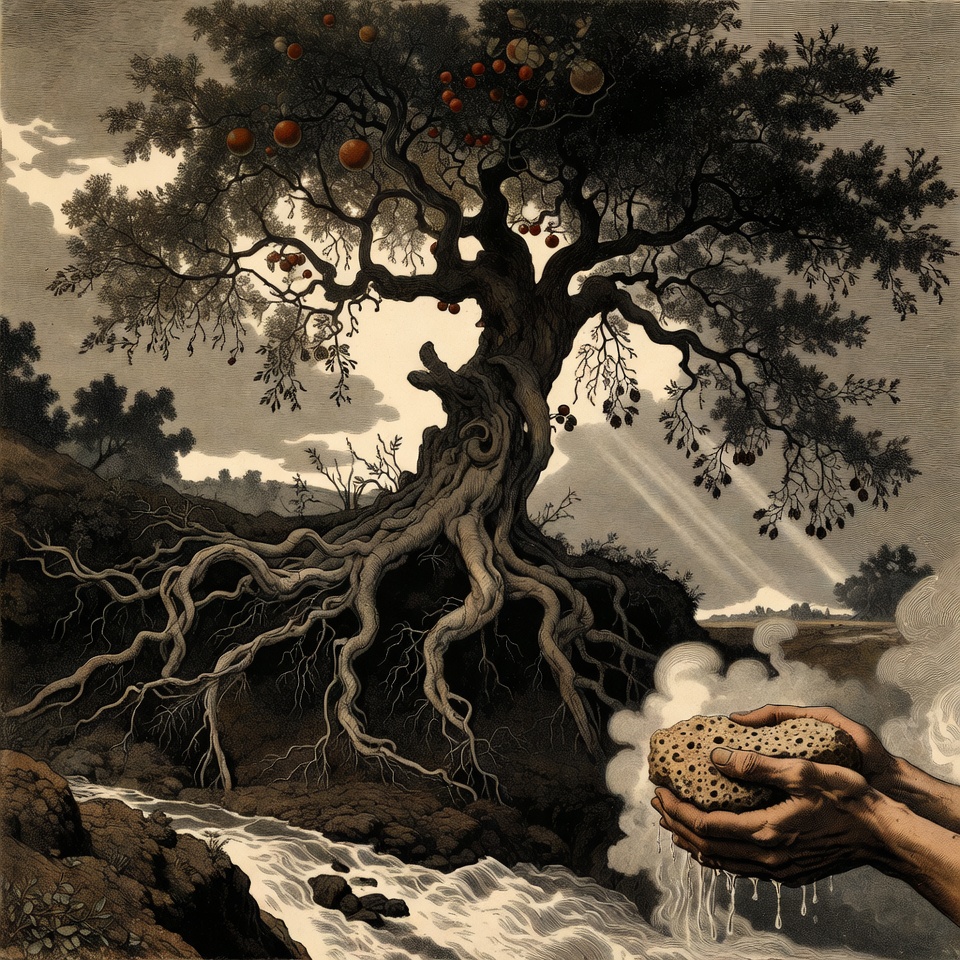
It’s a cycle that keeps unfolding—learning who God is, stepping into what He calls us to, seeing fruit spring up, then digging deeper.
The cycle works like this: As we seek to live in a way that pleases God, He fills us with His wisdom and strength. This filling equips us to live out the gospel in our actions, which in turn bears fruit—visible evidence of a life rooted in Him. As we bear fruit, our understanding of God deepens, drawing us closer to Him. The more we know Him, the more we rely on Him, and the more He fills us again. This ongoing cycle of learning, living, bearing fruit, and growing in knowledge keeps our faith alive and active.
This cycle of learning, living, bearing fruit, and growing in knowledge isn’t just theoretical—it’s something I’ve seen in my own life.
For years, I struggled with my temper. My anger would go from zero to ten in an instant, and I often felt powerless to control it. But since I’ve been saved, it’s like a weight has lifted. I won’t say I never get irritated, but now, instead of rage, it’s more of an annoyance that passes. God is reshaping my reactions, teaching me patience, and helping me forgive—not just others but also myself. That’s fruit I could never have produced on my own.
Another change I never expected was in how I interact with people. In my 30’s, I became more withdrawn, socially awkward, and anxious in large groups. I mainly stayed at home. But as I’ve grown in faith and become part of a church, something shifted. I’m more open, more comfortable in crowds, and happy to engage with people. I see this as part of God’s work in me, drawing me out of myself to be part of something bigger.
And it hasn’t just been me. My wife has seen these changes too. They’ve strengthened her own belief that God is real and working in our lives.
Paul’s words to the Colossians hit home because, like them, I’ve wrestled with faith. I’ve let the world’s expectations shape me. But when I look at what God has done, I see that faith isn’t static. It moves. It grows. It bears fruit.
And this cycle isn’t new—Jesus points it out too:
John 15:5 — “Whoever abides in me and I in him, he it is that bears much fruit.”
If I’m not abiding, nothing will grow. Am I truly abiding in Him? Abiding means staying rooted in Christ—trusting, obeying, and drawing life from Him. And that is only possible because of what He’s already done for us:
Colossians 1:13-14— “He has delivered us from the domain of darkness and transferred us to the kingdom of his beloved Son, in whom we have redemption, the forgiveness of sins.”
This sums up the core of the gospel, plain and simple—what God has done for us through Christ. We were trapped in sin, but God rescued us, gave us a new kingdom, and forgave us through Jesus. It’s the greatest good we’ve been given, a gift—not something we are owed. Before, I saw faith as something personal, maybe even individualistic. But seeing God as a loving Father who’s rescued us changes how I live it out—faith isn’t just mine; it’s meant for something bigger.
Faith That Moves
That’s why Paul’s words to the Colossians resonate—like them, I’ve wrestled with what faith really is and how easily extra things creep in.
The Colossians were tangled up in extra stuff—pagan ideas, Jewish legalism, and they blended them into their faith. I get it. It’s easy to let the world’s expectations creep into my thinking in my pursuit of approval or security. But Paul’s prayer cuts through: Faith that’s alive moves. James drives it home:
James 2:17 — “Faith by itself, if it does not have works, is dead.”
It’s not about earning—it’s the natural overflow of a life deeply rooted in Christ. What is my faith producing?
The good news is, God doesn’t leave us empty-handed. He fills us with His strength, His knowledge, His patience. It’s not my effort holding this up—it’s Him.
Philippians 1:6 — “He who began a good work in you will bring it to completion.”
He’s the source; I’m just a branch, meant to live this gospel out and let the cycle keep going—learning, growing, bearing fruit.
Abiding in Christ means staying rooted in Him, even when it’s uncomfortable. I’m slowly letting go of the fear of my friends and family judging me for becoming a Christian and accepting Jesus as my Lord and Savior.
Just today, a friend confronted me with strong language, asking if it was true that I was “born again”. A year ago, that might have shaken me. But these last two years have been transformative for me and my family. As we grow in faith, we feel more whole, like we’re on the right path.
Things are falling into place—not because life is easier, but because God keeps reinforcing our faith and guiding our steps. And I know He’s not done. The work He started in me—He will see it through.
The cycle of learning and growth keeps going.
My goal today is to lean into this—learning God’s will and living it for His glory. Colossians 1:10 ties it together: a life pleasing to Him bears fruit and deepens our knowing. Today, I can abide in Him by trusting His lead and letting that fruit show through how I live.
What fruit is your faith producing?
Where have you seen spiritual growth that surprised you?