Tag: Wisdom

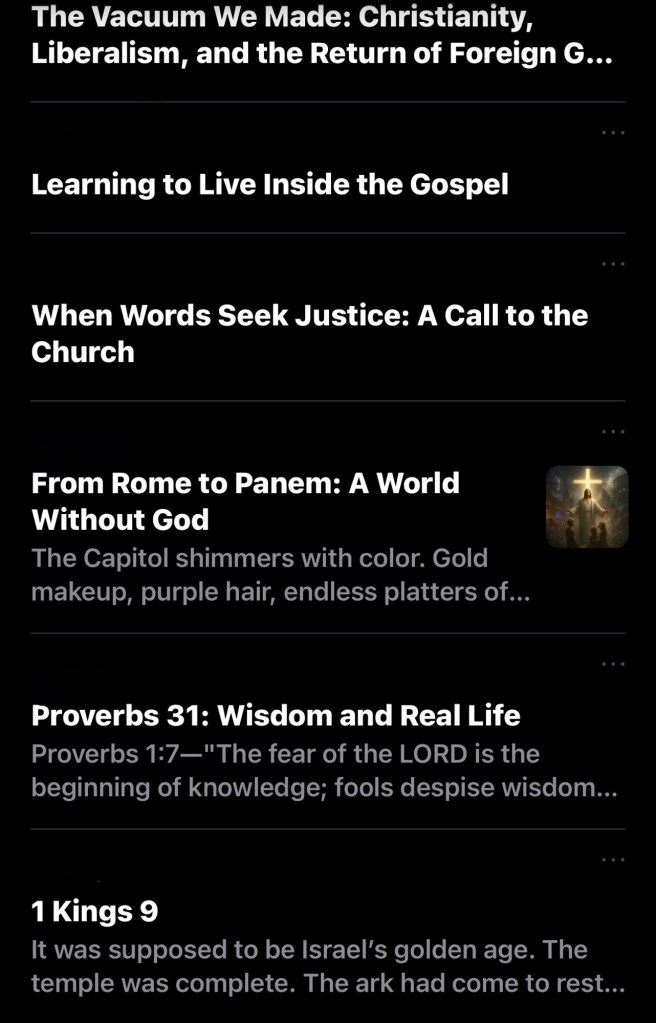
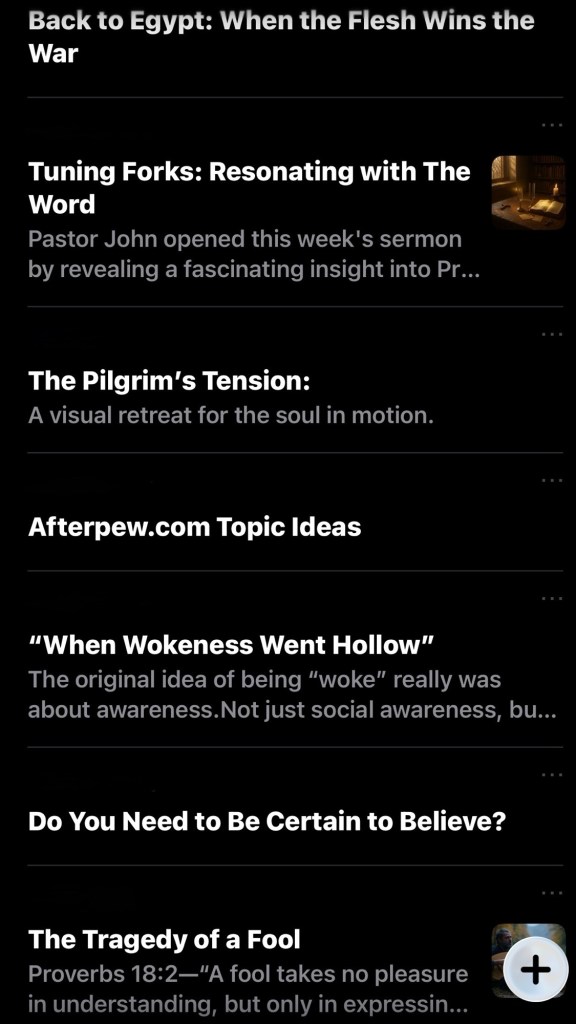
  • The Current State of my Draft Folder

    My personal archives of half-formed thoughts and future manifestos—proof that I spend more time starting things than finishing them.

    Which one should I finish first?
  • a call to apprentices in meekness

    (after e.e. cummings)


    listen—

    the hammers have fallen asleep
    & even the nails
    have forgotten their names

    somewhere
    (between a whisper
    and a workbench)
    the master is humming
    the silence that made you


    you—
    with your bright sharp
    explanations,
    your need to shine
    like an unblinking sun—

    put them down.


    (meekness isn’t
    what you think
    it is)


    it’s a door that doesn’t lock,
    a hand that doesn’t close.
    it’s knowing you could
    shatter something—
    and choosing instead
    to breathe.


    the grain of the wood
    is a psalm if you listen
    with your wrists.
    the sawdust a cloud
    of prayers nobody claims.


    be slower.
    unlearn thunder.


    in this room
    of unspoken tools
    you are being built—
    not into a statue
    but a tenderness.


    and when you leave,
    (do leave—)
    leave the dust
    on your palms.

    it looks good on you,
    this gentle
    unfinishedness.


    An apprentice does not master a craft through lectures alone.

    He watches, imitates, and practices under the eye of the master.

    In the same way, James teaches that wisdom is shown “by good conduct” (James 3:13), not by clever words.

    To apprentice in meekness is to enter Christ’s workshop, where truth is shaped into obedience.

    It is where knowledge becomes muscle, and understanding moves through the wrists, steady, responsive, and guided by the grain of His will.

    Wisdom’s proof is not what we can say, but what we quietly build with our hands and hearts.
  • The Secret of Enough: Proverbs 30

    “Two things I ask of you;
        deny them not to me before I die:
     Remove far from me falsehood and lying;
        give me neither poverty nor riches;
        feed me with the food that is needful for me,
     lest I be full and deny you
        and say, “Who is the Lord?”
    or lest I be poor and steal
        and profane the name of my God.”
    Proverbs 30:7–9

    This past Sunday, Pastor John preached about man’s tendency to believe that the next thing will make everything worth it — the next stage of life, the next paycheck, the next answered prayer.

    Proverbs 30 meets this mindset head-on, showing us where contentment is truly found.

    Some people flip open their Bible randomly, hoping God will speak through whatever verse they land on. You wouldn’t want to try that method and accidentally turn to Proverbs 30:2-3:

    Surely I am too stupid to be a man.
        I have not the understanding of a man.
     I have not learned wisdom,
        nor have I knowledge of the Holy One.
    Proverbs 30:2–3

    At first glance, it sounds like self-flagellation, but it’s more like radical humility. Agur knows how small he is compared to God. He doesn’t fool himself into thinking he’s the master of all things.

    In verse 4, he points to the One who truly holds all authority:

    Who has ascended to heaven and come down?
        Who has gathered the wind in his fists?
    Who has wrapped up the waters in a garment?
        Who has established all the ends of the earth?
    What is his name, and what is his son’s name?
        Surely you know!
    Proverbs 30:4

    The answer is simple: God.

    No human shares His authority. Everything does not rest on our shoulders.

    And that truth is the first step toward contentment.

    That’s why Agur’s prayer is so remarkable. Instead of chasing the “next thing,” he simply asks for what is fitting for each day. It is a prayer shaped by humility and dependence. Agur’s prayer is a call to receive just enough—no more, no less.

    Wealth carries the danger of forgetting God; want carries the temptation of dishonoring Him. Agur longs to be spared from both.

    From Prayer to Promise

    The apostle Paul discovered this same truth centuries later. Writing from prison in his letter to the Philippians, he testified:

    Philippians 4:11-13“I have learned, in whatever situation I am, to be content. I know how to be brought low, and I know how to abound. In any and every circumstance, I have learned the secret of facing plenty and hunger, abundance and need. I can do all things through him who strengthens me.”

    The connection is striking.

    Agur asked to be spared from poverty and riches; Paul learned contentment in both.

    Agur feared what extreme want or abundance might do to his faith; Paul’s faith remains strong regardless of his circumstances.

    Agur prayed for protection from spiritual dangers; Paul found that Christ’s strength enables him to face any situation without compromising.

    What Agur requested as protection, Paul achieved through Christ. It’s like seeing an ancient prayer answered centuries later through the gospel.

    Living the Prayer

    When I read Agur’s prayer in Proverbs 30, it immediately brings to mind the Lord’s Prayer: “Give us this day our daily bread,” and reminds me how I’ve learned to pray for just that in everyday life.

    Before every Uber shift, I pray over the people I’ll meet that night, asking God to help me get them safely to their destinations and to use me to share His Word should the opportunity arise. But I also pray that God would grant me exactly the amount of “bread” I need that shift to contribute well to my family.

    This summer has been especially slow for rideshare drivers. There have been nights where I’ve sat in parking lots wondering if I’d even get a single ride. My old self, the one who dropped out of college, who lived much closer to hunger and desperation, might have panicked. That version of me knew what it meant to truly need.

    But here’s what I now know: even during the slowest summer that I can remember, our family is doing well. Not because we’re rolling in money — we’re not. There are plenty of things I’d love to have but can’t afford. But when I look around at my family, at the life God has given us, I realize I have an embarrassment of riches in the things that actually matter.

    I’ll be honest. If someone had told my younger, desperate self that I was “rich in what matters,” I probably would have rolled my eyes. When you’re actually hungry, those kinds of platitudes sound like nonsense from people who’ve never missed a meal before.

    But that’s what I’m starting to get about Agur’s prayer. He wasn’t asking God to make life easy or to never struggle, but for help to keep trusting God no matter what happened.

    And maybe that’s what’s been happening to me without me even realizing it. I didn’t learn contentment by avoiding hard times. I learned it by going through them and somehow finding that God was still there.

    Final Thought

    Tonight, when I pray for daily bread during my Uber shift, I’m not asking to get rich. I’m asking for exactly what my family needs .

    No more, no less.

    And time after time, God provides precisely that portion.

    In a world that constantly pushes for more, Agur’s prayer reminds us to pause and reflect. Trusting God’s provision means recognizing that His ‘enough’ is always exactly right.

    And He knows precisely what we need.

  • Love = Obedience (Part 2: Heaven’s Love Made Visible)

    Written By: Dr. Shay Barrington

    [In Part 1, I wrestled with the gap between loving God and obeying Him, wondering what my failures said about my love. In Part 2, Dr. Shay Barrington reframes obedience as joy, not burden. Her Scripture-soaked words offer a hopeful way forward. Please enjoy.]

    We talk about obedience a lot in the Christian life, but somewhere along the way, that word started carrying more weight than it should. For some, it’s almost like a set of rules stacked high. For others, it feels like a test we’re always on the edge of failing.

    But maybe we’ve seen it all wrong. What if obedience isn’t a chain, but love? Not cold duty but the joyful response of a heart that belongs to God.

    That’s what I want to explore today. I want us to see obedience the way Heaven does—as love in action.

    Heaven never measures obedience by how well we perform rules. The measure is love.

    Real obedience isn’t lifeless. It’s alive. It rises out of a heart reshaped by grace. And where there’s love, obedience just follows.

    Jesus’ words are clear, but they go deeper than we sometimes realize: “If you love Me, keep My commandments.”

    That wasn’t a warning. It wasn’t meant to threaten anyone into submission. It was an invitation. He was calling for love so real, it would transform how His followers lived.

    Love is the root. Obedience is the fruit.

    We see it in everyday life. A child who loves their parent doesn’t groan when asked to help. They run. They do it gladly. Their service isn’t sour, it’s sweet. Because when you love someone, serving them doesn’t feel like a burden.

    That’s the obedience Heaven values: the devotion of a son or daughter.

    Somewhere along the way, we lose sight of that. We start thinking obedience is a test we can’t afford to fail, instead of the language of a love we already live in.

    Think of the Pharisees. They knew every law word for word. They had ceremonies down to the smallest detail. But they missed the heart of the Lawgiver. Without love, obedience becomes hollow.

    God has never wanted lifeless formality. He wants obedience that flows out of love.

    Look at Abraham, Moses, and Mary. Abraham walked away from everything familiar because he trusted the One who called him. Moses stood before Pharaoh because his love for God outweighed the treasures of Egypt. Mary bowed her head to the angel’s words because her love for the Lord was stronger than her fear of the unknown.

    Their obedience wasn’t dry duty. It was love in motion.

    And love will always cost something.

    It asks us to put our own will down. It leads us places others may not understand. But when love is the reason, even the hardest obedience feels light.

    Jacob worked seven years for Rachel, and Scripture says those years “seemed unto him but a few days, for the love he had to her.” Love changes the weight of the work.

    Sometimes obedience will take everything we have. But if we love Him, we wouldn’t choose any other way.

    That’s what turns obedience from a task into a joy. The Sabbath stops feeling like an obligation and becomes a delight. Self-denial stops looking like loss and starts looking like freedom. Holiness stops being a grim standard and becomes the privilege of reflecting His character.

    Jesus is the perfect example. His obedience was never mechanical. He delighted in doing His Father’s will. Even in Gethsemane, under the crushing weight of the world’s sin, He prayed, “Not My will, but Yours be done.” That was obedience in its purest form—born of a love so deep, there was no other choice.

    And this is where we need to pause. Why do we obey? Is it fear of punishment? Is it to look good in front of others? Or is it because we love Him more than anything else?

    Fear won’t keep us when obedience gets costly. It won’t hold us steady for a lifetime. But love will. Love will follow Christ through storms, losses, and the long, dark nights when obedience feels hard.

    And here’s the beauty, God never asks us to do this in our own strength. Love grows the more we see His love for us. The more we look at the cross, the more our hearts are drawn. And when our hearts are drawn, obedience becomes joy.

    That’s why the psalmist could say, “I delight to do Your will, O my God; Your law is within my heart.” Delight and duty meet when love leads.

    In the end, Heaven won’t be full of people who just checked boxes. It will be full of people who loved God so much that obedience was simply their way of saying, “I love You too.”

    May we choose to walk that way now, with joy. Because every act of obedience is another way to return His love.

    Obedience, in the Kingdom, isn’t a chain. It’s the song of a heart set free.

    And if obedience sings, love is the melody.

    May our obedience rise like incense, not out of fear, but out of love. May each choice, each step, each sacrifice be our quiet way of saying, “I love You too.”

    When Heaven tells our story, may it be said that our obedience wasn’t born of duty, but of love—so real it couldn’t help but obey.

    If this stirred something in you, pause for a moment today and tell Him you love Him. Then, live it in the choices that follow.

    With Love, Shay Barrington

    [Editor’s Note: I’m deeply grateful to Dr. Shay Barrington for lending her voice to this conversation. Her words reminded me that obedience is not about fear or failure, but about a love so deep, it naturally overflows into action. I hope her reflection brought the same encouragement to you that it did to me.]

  • Love = Obedience? (Part 1: What if I Keep Falling Short)

    “In the Bible, Love = obedience.”—Bryson Gray

    That might sound cold or rigid at first glance. At least, that’s what I thought when I saw this post. Maybe that’s because I grew up in a world that taught me that love means acceptance, support, and warm feelings. “Obedience” feels like the opposite of all that: rules, pressure, and expectations.

    Still, that short equation, Love=obedience, wouldn’t leave me alone. I kept coming back to it in prayer. Why was it lingering in the back of my mind?

    So, I went to Scripture to try and understand it and I started seeing it everywhere:

    John 14:15“If you love Me, keep My commandments.”

    John 15:10“If you keep my commandments, you will abide in my love, just as I have kept my Father’s commandments and abide in his love.”

    1 John 5:2“By this we know that we love the children of God, when we love God and obey His commandments.”

    2 John 1:6“This is love: that we walk in obedience to His commands.”

    Time after time, obedience and love, bound together. And that’s just in the New Testament.

    But what do I do with that?

    If being honest, sometimes I feel like Paul, when “I do not do what I want, but I do the very thing I hate.” (Romans 7:15)

    As James rightly pointed out in Chapter 4 of his epistle, my passions are at war within me, and I don’t always succeed in the moment at overcoming temptations.

    I fall short. Constantly.

    And when I hold that up next to the verses above, I start to ask questions I don’t know how to answer.

    If love equals obedience, then what does that say about my love for God? Can I still say I love Him when I keep falling short?”

    Why does obedience feel so hard, even when I want to obey?

    And what do I do with the guilt that creeps in when I know what’s right and still fail to follow through?

    Final Thought:

    I want to love God more deeply, and I want that love to show up in how I live. But I am painfully aware of this gap between my desire to obey and my ability to follow-through.

    That’s why I asked Dr. Shay Barrington if she would be willing to write a companion piece on the topic. What she wrote helped me stop spiraling and start hoping again.

    If you’ve felt the same tension, if this idea unsettles something in you too, I hope you’ll read her reflection next.

    ➡️ Read Part 2: Obedience: Heaven’s Love Made Visible

  • Esther’s Echo: Friends for Such a Time as This

    When my wife prayed for a friend, it came from a place of quiet desperation. We were in a season of unraveling, both politically and spiritually.

    From 2016 to 2020, the foundations we had grown up with began to shift. We were lifelong Unitarian Universalists, progressive Democrats, and Bernie Sanders supporters. But over time, our trust in that framework began to erode. The voices we once followed no longer resonated. We started seeking something different.

    That search led us toward unexpected voices. Some were conservative; many deeply religious—Catholics, Orthodox Jews, and Orthodox Christians. They carried themselves with joy and resilience. We saw how their faith gave them peace, confidence, and purpose.

    That was the beginning of our turning. We didn’t yet know what we were turning toward, only that we were being drawn.

    And that’s when God answered Amy’s prayers by sending into our lives the Tanners—Jenna, Jake, and their two young sons.

    When we met them, they too were seeking something that was lacking in their lives, before belief had taken root in any of us.

    But something about their presence felt intentional. We connected easily, and trust came quickly.

    We shared our doubts and questions.

    We shared family vacations. We broke bread together.

    We creek-stomped together.

    Together, we created a friendship grounded in truth and laughter.

    Together, we grew our families into one.

    Our friendship with the Tanners grew as we bonded over Dr. Jordan Peterson’s Bible lectures and philosophy. His insights sparked long talks that bridged our doubts and drew us closer to truth.

    A year or so later, the moment came when I accepted the reality of Jesus and shared that with Amy and them right away. That moment was a step for us all, I believe. It gave space for them to hope that even deeply skeptical people could come to faith, and that this transformation was possible for others too.

    And they all did.

    They each found their own faith, a shared journey that deepened our bond.

    Jenna and Amy walked closely together through this season of becoming. As Amy embraced a new faith and a new political identity, she carried grief and uncertainty alongside hope. Jenna helped her see that nothing precious was being lost. Her compassion, strength, and passion remained intact. That friendship gave Amy the freedom to grow without fear.

    Now, Jenna, Jake, and their two sweet young sons have moved to the West Coast.

    The goodbye brings real sorrow. It’s a parting marked by love, but the ache is still real.

    As it happens, I’ve been reading through the book of Esther. God’s name doesn’t appear in the story, yet His hand moves throughout it—guiding events, arranging timing, placing people. The most famous line in the book comes when Mordecai says to Esther:

    Esther 4:14“And who knows whether you have not come to the kingdom for such a time as this?”

    And I made the connection. He called Esther to see her position not as an accident, but as an assignment.

    Maybe that’s how we should see Jenna and Jake’s arrival in our lives. They were friends we needed for such a time as this.

    And maybe now, they’re being sent for such a time as that.

    This moment holds both loss and purpose. In Esther’s story, Mordecai spoke vision into Esther’s next step. Perhaps we’re now called to do the same: to bless our friends and trust that their new place is just as appointed as their presence here was.

    And here’s where Esther’s God speaks the loudest—by not speaking at all. The silence in the story reminds us that God doesn’t need to be loud to be present. His providence is often quiet, invisible, threaded behind the curtain, but always active.

    That same God, the One who authors stories and orchestrates timings, was at work when Jenna and Jake entered our lives. And we trust He’s still writing now, as they leave.

    Could there be a return someday? Absolutely. God writes beautiful reunions. But whether near or far, the bond we share remains. The miles may have changed, but the love will not.

    So we say goodbye with tears, but also with gratitude, because we believe in divine timing. And we believe that what God authors, He sustains.

    Across states.

    Across seasons.

    Across all the distances life may bring.

    “Heavenly Father,

    We thank You for sending the Tanners into our lives for such a time as this, weaving our lives with their love. Guide them in Your purpose, keep them safe in Your care, and sustain our bond across all distances, through Christ our Lord,

    Amen.”

  • So Act Like It: Pentecost, Presence, and Boldness

    It was Pentecost Sunday this past weekend and Brian Wagers was preaching. Somewhere near the end of his sermon, he said something that didn’t make sense to me at all, but somehow I knew it was important.

    So I wrote it down.

    “That which is assumed is healed, because that which is united to the Godhead is healed. So Christ’s full humanity means we receive the full deity of God in ourselves when the Holy Spirit rests upon us. So act like it.”

    I didn’t know what it meant, but it sounded like seasoned Christian language, and something in me knew I needed to find out.

    After I got home from church that day, I sat with it, looked up the theology behind it, and dug into what Brian was referencing.

    Jesus didn’t just appear as a kind of human. He wasn’t God masquerading in flesh. He was fully human: body, mind, will, and emotions—and fully God.

    Every part of humanity that He assumed is now joined to God. That’s what theologians mean when they say, “what is not assumed is not healed.”

    The phrase comes from Gregory of Nazianzus, a fourth-century Church Father, writing against heresies that denied Jesus’ full humanity. His point was simple but profound:

    “That which He has not assumed He has not healed; but that which is united to His Godhead is also saved.”Gregory of Nazianzus Epistle 101, c. 382 AD

    This became foundational in Christian theology, affirmed at the Council of Chalcedon (451 AD) and echoed across centuries: that Jesus took on the fullness of humanity to redeem the fullness of humanity. He had to take on the whole of humanity or none of it.

    So now, when the Holy Spirit rests on us, we don’t just get guidance or peace.

    We receive the fullness of God. Living in us. If that’s true, then God hasn’t just reached down.

    He made His home in us.

    And that’s where Brian’s last sentence landed like a stone:

    “So act like it.”

    That’s when I realized how much energy I still spend trying to manage how my faith looks to others.

    I don’t lie about my faith. I don’t deny it. But I might be guilty of trying to soften the edges. I hesitate. I only share my experience with the gospel once it feels “safe.”

    Especially around people I love: my parents, old friends, those from the Unitarian Universalist world I used to belong to. I know some of them already think I’ve lost it and have written me off. And I struggle to bring the good news to those closest to me.

    But this struggle with boldness isn’t new for me.

    Years ago, before I became a Christian, I went to a Sufi retreat with friends who had grown up going every year. And although I didn’t participate in the dancing in circles and the singing of chants late into the night, I was surprised when they started praising Jesus.

    And for reasons I didn’t understand then, it offended me.

    Looking back at my journal from that time, I found this telling entry:

    I will praise the joy of Life. I will praise the Earth. I will praise the creations. But I won’t worship the Creator.

    I had drawn a line in the proverbial sand back then. I didn’t want to go as far as worshipping my Creator.

    And now, ironically, I find myself facing the same line—just in the opposite direction.

    Back then, it was refusal to worship.

    Now, it’s reluctance to witness.

    Same fear. New disguise.

    That’s why Brian’s sermon felt like a personal message to me.

    “You should share the gospel more. Even though people will ridicule you… think you’re stupid for being religious… God is with you.”

    He was reminding us what we carry. And how we ought to live in response to that.

    Because I do know Jesus is real. I believe the gospel is true. And still, I catch myself holding back because I’m afraid of being dismissed before I even begin.

    But then I read Acts 2 and the story of Pentecost.

    Peter stands up in front of a crowd that’s already mocking him. “They are filled with new wine,” someone sneers. But Peter doesn’t explain himself. He doesn’t defend his tone. He doesn’t soften the message.

    He just preaches.

    That’s what struck me most this Pentecost, not the speaking in tongues, but the surrender. The apostles had been hiding weeks earlier. Now they’re proclaiming Jesus, fully exposed, defying safety.

    They had the Spirit. And that was enough.

    Final Thought:

    If the Holy Spirit really rests in me, if the fullness of God dwells in this ordinary body, then why am I worried about looking foolish?

    Why am I still trying to sound smart enough and nuanced?

    I have the Spirit of the living God.

    Why would I care what anyone else thinks?

    God is with me. God is in me.

    So I’m done trying to control the optics.

    I don’t need everyone’s approval. I have His presence.

    Acts 2:15–16“These people are not drunk, as you suppose… but this is what was uttered through the prophet Joel.”

    They thought it looked crazy. Peter didn’t care.

    They were misunderstood.

    Mocked.

    Spirit-filled.

    So am I.

    And I’m ready to act like it.

  • Strumming God’s Design: Freedom in Boundaries

    Reflections on Proverbs 20

    We don’t usually think of boundaries as beautiful.
    But what if they’re what make beauty possible in the first place?

    This week at church, Brian, our pastoral resident, preached on Proverbs 20. I was serving in the nursery during the service, so I didn’t get to hear it live. But later that day, I sat down with the livestream so I could catch up. I’ve been writing through each chapter of Proverbs week by week, and I didn’t want to skip this one.

    The chapter covers a range of topics: justice, speech, honesty, discernment. But most of it, as Brian pointed out, can be grouped under “moral boundaries.” These are the kinds of limits that don’t restrict life as much as shape it. But that only makes sense if you believe life has a shape in the first place.

    If you’ve ever tried to play guitar without knowing how, you’ll know what I mean.

    Imagine picking up a guitar for the first time. You can do whatever you want with it. Bang on the strings, twist the knobs, start strumming, no instruction, no structure, just doing whatever feels good. You’re technically free. But what you’re playing probably sounds chaotic. The guitar was built with certain boundaries in mind. Strings have pitch. Frets divide sound. Chords form harmonies. There’s a design to it, a right way to approach it. And until you learn them, what comes out isn’t music.

    It’s just noise.

    Now picture someone who’s spent time learning how the guitar works. They know their scales, their chord shapes and rhythm. They’ve embraced limitations such as finger positioning, timing, even discomfort. But now, when they pick up that same guitar, something beautiful happens.

    They can make beautiful music. They can improvise and can even break the “rules” with intentionality because they know the structure they’re working within. They aren’t less free than the person banging on strings at random; they’re more free.

    The structure didn’t limit them. It released them.

    God’s moral boundaries are like that.

    They’re not barriers to keep us from living, rather they are the framework that helps us live well. Proverbs 20 brings this design to life, starting with purpose.

    Proverbs 20:5“The purpose in a man’s heart is like deep water, but a man of understanding will draw it out.”

    Without wisdom, we stay at a surface level, blind to our own purpose. But through God’s Word and Spirit, we are taught how to live in tune with His design.

    As Brian pointed out, and this was the statement that really stuck with me, if life didn’t have an ultimate purpose, then wisdom wouldn’t even be a category. There’d be no such thing as “a good way to live”, only preference, survival, or self-expression.

    But wisdom assumes a telos. A goal. A design that can either be honored or ignored. That design is revealed in how we actually live.

    Proverbs 20:11“Even a child makes himself known by his acts, by whether his conduct is pure and upright.”

    Basically, you can’t fake who you really are for very long because your actions always give you away. The verse mentions kids because they haven’t learned to hide their motives yet. But honestly, adults aren’t much better at hiding their true selves.

    Your life is like a walking advertisement for what you actually care about, not what you say you care about. You might think you can be one way at church and another way everywhere else, but people aren’t stupid; your actions speak volumes.

    This brings up a deeper question about control. If our character inevitably shows through our actions, and if there’s a design we’re meant to follow, what role do we actually play in shaping our own lives?

    Proverbs 20:24“A man’s steps are from the Lord; how then can man understand his way?”

    For someone like me, who spent a lot of life trying to chart my own course and make sense of it afterward, that’s actually comforting. I don’t know what’s coming next. I’ve had plans fade, doors close, things not work out. But the more I’ve come to value God above everything else, the less I feel the need to force everything to make sense right now. I don’t have to be the architect. God’s wisdom is better than mine, and His boundaries lead to a kind of freedom I never had when I was just doing my own thing.

    I used to fear that giving up control would mean giving up identity. Now I’m learning that trusting God is where my identity actually takes shape.

    But here’s the thing about living within these boundaries: we are not meant to live in them alone. It takes a community to keep you in tune.

    That’s why discipleship has become so important to me. I need people who know me well enough to help me hear what’s really going on in my heart.

    Proverbs 20:27“The spirit of man is the lamp of the Lord, searching all his innermost parts.”

    God sees me clearly. And when I let friends, mentors, my church community in, they help me see clearly too. Not just in the big decisions, but in the small, daily ones where integrity is built.

    Final Thought:

    Whether you’re a believer or a skeptic, I wonder if the guitar image lands for you. The idea that what looks like restriction might actually be the path to something more beautiful than chaos ever promised.

    That the shape of your life matters because it was meant to matter.

    That maybe, just maybe, the strings weren’t meant to be broken, but played.

  • A Soul Without Sense: Integrity and Proverbs 19

    We’ve been moving through the book of Proverbs one chapter at a time each week at church, and this past Sunday, our pastoral resident Brian Wagers preached on Proverbs 19.

    The theme was integrity. Proverbs 19 gives a rich and at times sobering picture of what that looks like.

    Proverbs 19:1—“Better is a poor man who walks in his integrity than a rich man who is crooked in his ways.”

    The message is clear: it’s better to be broke and blameless than wealthy and corrupt. But that’s not the story our culture lifts up. We’re trained to admire success, charm, and influence.

    Proverbs 19 clearly says: a clean conscience is worth more than a padded bank account.

    That verse forces us to ask: what kind of wealth are we really chasing? The kind you can deposit, or the kind you can live with? Because at some point, all the external success in the world can’t cover up internal rot. This is a truth I have learned firsthand.

    As a kid, I used to lie all the time. I wasn’t even good at it, but if I thought I could avoid trouble, I’d do it. If I wanted someone to be impressed by me, I’d make up stupid things.

    For instance, I remember once, in fourth grade, I told the kids on the playground I’d gone to see a movie called Pirates. This was 1990. No such movie existed. I just wanted to sound cool.

    Lying was one part of my struggle; sneakiness was another.

    I would go through my sister’s room, nosy and curious and totally invasive. I wanted to know what she had, what she was doing, what she might be hiding.

    In a separate instance, I remember reading someone’s private journal—deeply personal things that weren’t meant for my eyes. I still regret it.

    That desire to know everything, especially the hidden things, felt irresistible. Even in conversations, I’d find myself tuning out the person in front of me just so I could eavesdrop on a different conversation happening behind me.

    My curiosity seemed to always win out over my conscience.

    Eventually, though, the shame caught up to me. It wasn’t one moment of regret; it was slow and sinking, like waking up and not recognizing the person you’ve become. It was sometime in my twenties when I started recognizing that the way I wanted to be seen—trustworthy, honest, dependable—was completely out of sync with the way I acted.

    That tension between how I looked and who I actually was started to wear on me.

    Proverbs 19 nails what I was back then: a soul without sense, chasing approval with lies instead of building trust with truth.

    I hardly dare to judge my past self with the words of verse 5:

    Proverbs 19:5“A false witness will not go unpunished, and he who breathes out lies will not escape.”

    That phrase, “breathes out lies,” makes me wince. That was me back then, exhaling dishonesty without much thought.

    But lies don’t evaporate. They circulate. They cling. They catch up. And when they do, the fallout is usually worse than whatever we were trying to avoid.

    Brian pointed out the Hebrew language doesn’t have an exclamation point, so they repeat for emphasis. And Solomon repeats himself just four verses later, escalating the warning:

    Proverbs 19:9“A false witness will not go unpunished, and he who breathes out lies will perish.”

    It’s as if he’s saying, “In case you didn’t take me seriously the first time…”

    This isn’t just about consequences, it’s about what lying does to a person.

    It erodes your sense of self. It unravels relationships. It turns your life into a web that gets harder to untangle the more you build it.

    Proverbs 19:22“What is desired in a man is steadfast love, and a poor man is better than a liar.”

    What people actually want isn’t perfection or flash or wealth?

    Solomon says they want steadfastness. They want to know the people they love are the same in private as in public. They want to trust. And trust is built on truth, not performance.

    Today, integrity is one of the most important values in my life. Maybe that’s because I remember how it felt to live without it.

    I still have moments where I’m tempted to impress, hide, or withhold. But I believe in a kind of wholeness that’s worth pursuing: a life where your inside matches your outside.

    I was thinking about what it looks like to model this for my kids. We talk about trust and honesty, owning our mistakes, and how building trust is like building a house: every honest word adds a brick, and every lie knocks one out.

    This week, I’m really reflecting on whether I’m modeling integrity well. The truth is, I can’t afford to fake it. I’ve lived that double life already. And it’s not worth it.

    Final Thought:

    Proverbs 19 grounds us with essential questions:

    • Who are you when no one is watching?
    • Who are you when there’s nothing to gain?
    • Who are you when being truthful costs you something?

    To keep myself honest, I’m committing to this question:

    What is the one lie I’m most tempted to tell right now, and what is it hiding?

    I want to be the same man in every room. Not perfect, but truthful; someone my children can trust, my friends can rely on. Someone who lives with integrity, whether anyone’s watching or not.

  • Drowning in Opinions: Proverbs 18’s Call to Listen and Understand

    We are drowning in opinions.

    Having an opinion isn’t the issue. After all, God gave us minds and voices for a reason. But Proverbs presses deeper: do we speak to understand, or just to be heard?

    Scroll through X or Facebook, tune in to cable news, or just sit in on a casual conversation long enough, and you’ll see it: everyone has something to say, but few care to understand.

    This isn’t just a cultural trend anymore. It’s a spiritual sickness. Proverbs 18:2 names it for what it is: foolishness.

    Proverbs 18:2“A fool takes no pleasure in understanding, but only in expressing his opinion.”

    That verse seems to be describing modern society well.

    And what’s truly amazing is that Proverbs 18:2 was written nearly 3,000 years ago. Long before smartphones, social media, or pundit panels, this warning was in place. It’s uncanny how accurately it captures today’s society.

    Although technology is new, the human heart is not. We haven’t grown out of this kind of nonsense. It’s still here and thriving.

    That should humble us. And in a strange way, it should also awaken us: God knows us. The Bible isn’t outdated, it’s devastatingly accurate.

    Pastor John preached on Proverbs 18:20-21, about the power of words to shape minds and lives.

    “Every word I speak is a seed; I choose to plant life.”

    That was the reflection he left us with for the week.

    Those themes felt familiar. I have explored similar territory in Proverbs 10, where I talk about how words, even small ones, wield unseen power, how a single sentence can strengthen a person’s resolve or plant the seed of their downfall.

    And again in Proverbs 15, where I asked myself, “Who am I becoming, with each word I choose to speak?

    But while Pastor John focused on how words build or destroy, I had hoped that when we got to Proverbs 18, we would spend some time on an earlier verse in the chapter, Proverbs 18:2. It’s a short line, but it smacked me with how relevant it is for today’s culture.

    You see, I’ve been working on a longer piece, a bit different from my usual style, tracing what the Bible says about the fool using the Logos Bible Software to follow it through Scripture.

    During my research, Proverbs 18:2 really stuck out to me. It offers a snapshot of the fool’s mindset.

    “A fool takes no pleasure in understanding…”

    That’s the root issue. The fool enters every room with self-importance. They already know what needs to be said, and they assume they’re the one to say it.

    “…but only in expressing his opinion.”

    It’s not even about truth. It’s about attention. The fool doesn’t want to understand, they want to be heard. And sadly, we live in a world that rewards that. Platforms have been built around this impulse. As long as it’s loud, witty, or dramatic, it gets traction even if it’s completely untethered from wisdom.

    The wise person, on the other hand, asks questions. They pause before reacting. They know even their strongest opinions might be wrong. They want to understand more than they want to impress.

    But that won’t tickle the algorithm. Listening rarely drives clicks. Humility doesn’t trend. So what’s our alternative in this attention economy? We need only look to our greatest example.

    When I look at Jesus, I see someone who was known for asking questions. Questions that invited people to think, to see. In a world quick to speak, He slowed people down with truth that came wrapped in a question. Someone who spoke with grace and truth.

    Jesus didn’t throw his words like a brick. He planted them like seeds through presence, patience, and prayerful intention.

    Though I started by highlighting verse 2 instead of Pastor John’s focus on verses 20-21, the themes ultimately converge. After all, Proverbs 18:20-21 tells us:

    Proverbs 18:20–21“From the fruit of a man’s mouth his stomach is satisfied; he is satisfied by the yield of his lips. Death and life are in the power of the tongue, and those who love it will eat its fruits.”

    Fools speak for attention. The wise speak to plant. And as Proverbs says, their words produce fruit—words can feed the soul or poison it, give life or bring harm, and we live with what we’ve spoken.

    We live in a time when being loud is often mistaken for being wise. When having a platform seems more important than having a clue. Hot takes get rewarded. Listening gets skipped. Dialogue becomes a competition to dominate, not a chance to understand.

    This isn’t just annoying. It’s dangerous.

    When the fool is elevated, communities suffer. Relationships break down. Churches divide. Nations fray at the seams.

    Why?

    Because fools don’t want to learn. They want the attention. They don’t ask questions. They lecture. And in doing so, they trade wisdom for applause, understanding for ego.

    But the way of Christ is different. It’s deeply countercultural.

    The way of Jesus is slow to speak, quick to listen, and always hungry for truth even when it’s humbling. That’s the example we’re meant to follow.

    We are to be people who seek understanding, not just speak our minds.

    Final Thought:

    Every word is a seed. We’re scattering them in a world drowning in opinions, where attention is king. It’s tempting to join the fray but that’s a hollow path and it’s a betrayal of the wisdom we’re called to pursue.

    The fool craves an audience, not truth. Yet wisdom, the kind Jesus modeled, doesn’t clamor for attention. It plants patiently and transforms deeply.

    So stop.

    Listen.

    Wrestle with what’s true, even when it humbles you.

    In a culture unraveling under the weight of its own words, choosing to speak with care is no small act. The seeds you sow now will either nurture souls or choke them. Choose well.

  • Carrying the Grudge Sack: Proverbs 17:14–19

    I’m often afraid of conflict, but I’m only sometimes a conflict avoider. The truth is, I find it very hard to conceal my displeasure when something’s wrong. I don’t always go looking for confrontation, but I also don’t tend to hide it well when tension shows up.

    My wife, Amy, grew up in a household where conflict was mostly avoided. Me, not so much. When we got together, that led to a bit of a clash. I wanted to address issues right away, she wanted time and space. But early in our marriage, we made a decision: we weren’t going to let things fester. We were going to be honest and open with each other as often and as early as we could.

    It wasn’t just for us. It was also for our kids, who need to see their parents on the same page, a solid and united front.

    Proverbs 17 has a lot to say about how wisdom plays out in our relationships, especially when conflict enters the picture. And let’s be honest, conflict always does.

    Proverbs 17:14“The beginning of strife is like letting out water, so quit before the quarrel breaks out.”

    It’s a vivid metaphor. A small crack in a dam seems harmless at first, but water under pressure doesn’t need much space to escape. Once it finds a way through, the rest comes with force. Solomon’s advice is simple and urgent: stop things early. Don’t let a minor moment escalate.

    This image troubled me, though. If strife is water behind a dam, then are we always just holding back our anger and hoping it doesn’t spill over? That doesn’t quite sit right with me.

    If wisdom only means maintaining internal pressure and damage control, is that really the transformed life Scripture calls us to? It made me wonder if there’s another way to think about how conflict builds.

    I was reminded of a metaphor I heard years ago: the grudge sack.

    Whenever someone doesn’t deal with a small issue, biting their tongue, saying they’re fine when they’re not, they’re essentially tossing a stick into that sack.

    A frustrating comment. A moment of being dismissed. A misinterpreted text. One by one, it fills up. None of these things are huge by themselves, but when you don’t let them go, the weight accumulates.

    Learning this concept gave me a way to approach conflict. Now, instead of collecting those sticks, I try to address issues promptly and honestly.

    I’ve seen how people who carry grudge sacks eventually reach a breaking point because their sack became too heavy without them even realizing it.

    When that happens, they usually don’t respond wisely; they react. They speak out of weariness or bitterness instead of discernment or love.

    Even when they think they’re standing up for what’s right, they are often just trying to unload what they’ve been carrying.

    Proverbs 17:16“Why should a fool have money in his hand to buy wisdom when he has no sense?”

    Wisdom in conflict isn’t just about resolving issues early; it’s about building a character that responds with care.

    You can’t buy character. You can’t purchase your way out of conflict. Wisdom isn’t a thing you apply after the explosion. It prevents the blow up by changing how you see situations and people, and by guiding your responses before words are spoken.

    Protecting integrity often means choosing discomfort now to avoid damage later.

    Proverbs 17:17“A friend loves at all times, and a brother is born for adversity.”

    That kind of love is not just about showing up when things get hard. It means staying present when emotions run high and choosing connection over defensiveness.

    I want to be that kind of person. But when conflict arises, my instinct is usually to argue that I’m correct. I need to slow down to ask if I actually am.

    That might be the hardest part of walking through tension with wisdom: slowing down enough to question my gut reaction.

    Sometimes love looks like listening longer than is comfortable.

    Sometimes it looks like asking myself what I’m missing before I say anything at all.

    Jesus didn’t struggle with that question—He was never wrong. But me? I second-guess myself all the time.

    And because I do, it requires a different starting point for me.

    Proverbs 17:19“Whoever loves transgression loves strife; he who makes his door high seeks destruction.”

    Insisting on being right, shouting to be heard, and always trying to win arguments all lead somewhere, and it’s not good. Pride escalates. Love softens.

    Pastor John gave us a phrase to carry with us this week: “Love doesn’t stir the pot. It softens the storm.”

    It’s not about avoiding conflict or letting everything slide. It’s about choosing the kind of presence that defuses rather than ignites.

    Final Thought:

    Conflict is unavoidable. But destruction is not.

    That’s the difference Jesus makes. He didn’t avoid hard conversations, and He didn’t explode under pressure. He loved wisely. He corrected with compassion. He never let resentment simmer. And even when wronged, He didn’t carry a sack of grudges. He carried a cross. For me. For you.

    In the small frictions of daily life, where wisdom is tested and character revealed, we have a choice.

    We can collect grievances until they spill over, or we can follow our Savior’s example: speaking truth in love, extending grace even when it costs us, and pursuing reconciliation instead of revenge.

    The water of strife may always be there, pressing against the dam. But through Christ, we aren’t just managing the pressure. We are being transformed by it.

    And that transformation happens one conversation at a time, one choice at a time, one quiet moment of surrender at a time.

  • Holding Plans with Open Hands: Proverbs 16

    Some days, it feels easy to trust God. Life settles into a peaceful rhythm. The days feel steady and blessed. Plans unfold the way we hoped they would.

    Other days, the ground feels less certain. We map out the future carefully, only to find ourselves standing at unexpected crossroads. It is in those moments that the real test of trust begins.

    As we continue our journey through the book of Proverbs at church, Pastor John preached on Proverbs 16 this past Sunday. His message about how God guides our plans inspired and shaped much of what I’m reflecting on here.

    As I think about the years ahead, I carry goals in my mind. Summer travel plans. Dreams about future work. Financial hopes. The awareness that my children are inching closer to leaving home.

    There are practical things I would like to accomplish. There are milestones I hope to reach.

    Proverbs 16 teaches me that wise planning involves holding each purpose lightly and trusting God to shape the steps I cannot foresee.

    The Wisdom of Divine Direction

    The wisdom of this chapter shows me the difference between my plans and God’s direction.

    Proverbs 16:1“The plans of the heart belong to man, but the answer of the tongue is from the LORD.”

    Planning is not wrong. In fact, planning is part of living wisely. It is responsible and good to think about tomorrow. But Proverbs reminds me that the power to bring visions to life does not rest in me. It rests in God alone. My work is to plan with wisdom, to act with integrity, and then to trust the One who establishes the path.

    There is a hidden pride that can creep into preparation. I sometimes find it in the corners of my thinking, when I start to believe that if I strategize carefully enough, I can ensure the outcomes I want.

    Proverbs 16:3 “Commit your work to the LORD, and your plans will be established.”

    Commitment, in the biblical sense, is not a clenched jaw and a white-knuckled determination. It is a rolling over. A lifting of the burden from my own shoulders onto the shoulders of the One who can carry the weight without stumbling. It is not that the goals or the work cease to matter. It is that they find their rightful place under the authority of God.

    In fact, Pastor John shared that the Hebrew word used for “commit” in Proverbs 16:3 is gōl, which means “to roll.” It pictures a physical act of transferring a burden — lifting it off ourselves and placing it on God. Even the ancient Greek translation of the Old Testament, the Septuagint, uses a word that means “to roll away.” The image is clear: biblical commitment is not about clenching tighter, but about letting go. It is not about carrying more, but about trusting the One who already holds it all.

    When God’s “No” Becomes a Blessing

    This is not just theory for me. I have seen this play out up close.

    A few years ago, my wife Amy had been faithfully working for the same organization for seven years. When the president’s position opened, she applied. She prepared extensively, pouring her insight and experience into the process. She knew the organization intimately and understood what it needed to survive and thrive. It came down to her and one outside candidate, someone with more years, fundraising experience, and institutional connections. In the end, the board chose the outside candidate.

    At first, it was a bitter disappointment. It felt unfair. Amy had invested herself deeply into that place. She had given her best years and her best work. But in the months that followed, something unexpected happened.

    As she continued to work under the new leadership, she began to realize that her values no longer aligned with the organization’s mission. Her vision for its future diverged from the direction it was heading. Slowly, a sense of release began to form in her heart.

    Eventually, Amy applied for a job with the city — a position that attracted more than seventy-five applicants. By God’s grace and Amy’s preparedness, she was offered the job. Today, she is thriving in a way she had not imagined possible during those early days of disappointment. She is valued, energized, and grateful.

    As we reflected together on that chapter of her life in light of Proverbs 16, Amy said to me, “I’m so thankful for that no.” Those prayers she prayed so desperately for the president position — I see now that God answered them perfectly by closing that door.

    Looking back, it is clear that God’s design was better than the one we originally hoped for. As we often say in our household, “God’s plan is the best plan.” It was not just a better career move. It was a better place for her heart and her gifts to grow.

    Proverbs 16:9 “The heart of man plans his way, but the LORD establishes his steps.”

    Faith in Every Season

    While I currently find myself in a time where trusting God feels more natural, blessed with health and family stability, I’m deeply aware this isn’t everyone’s reality. In fact, I’m humbled by those in our own church family who are walking through profound challenges—health struggles, loss, uncertainty—while holding onto these same truths. Their faith in hard times speaks louder than any sermon.

    I’m grateful for the relative ease of my present circumstances, while recognizing that Proverbs is preparing all of us—not just for the good days, but especially for when expectations fall apart. When the doors we wanted to walk through are closed. When the life we mapped out looks very different from the road God is asking us to walk.

    The call is the same in every season: Rest in His control. Take responsibility for today. Move at His rhythm, not mine.

    I am learning that rest does not mean passivity. It is not a withdrawal from effort. It is a settled confidence that even when my steps are interrupted, my life is not derailed.

    God’s sovereignty is not a safety net to catch me if I fall. It is the firm ground I am walking on, even when the path ahead disappears into the mist.

    Final Thought:

    When I hold my hopes with open hands rather than clenched fists, I discover the paradox of Proverbs 16: true freedom comes not from controlling my future, but from entrusting it to the One who already holds it.

    In this divine partnership, where I plan with wisdom and God directs with sovereignty, I find not just security for tomorrow, but peace for today.

    Amen.

    If today finds you at a crossroads, or even just quietly wondering about the future, I’m praying these words remind you:

    God is faithful in every step.

    I’d love to hear how Proverbs 16 is speaking into your life these days.

  • When I’m Right But Not Righteous: Proverbs 15

    There are times I catch myself mid-sentence and wonder, Who am I trying to be right now?

    Not am I right?—because often I am—but is my “rightness” actually righteous?

    What’s the difference between being right and being righteous? Is it rooted in love—or in my need to prove something? Am I speaking as the humble follower of Christ I’m becoming—or as the reflex to be the most technically correct person in the room?

    I don’t have a specific story to share today. Instead, Proverbs 15 has me noticing a pattern in my speech—and recognizing the Spirit’s gentle way of pointing it out as I seek to grow.

    Lately, I’ve been trying to pause before I speak—long enough to invite God into that quiet space between thought and word. It sounds simple, but rewiring my patterns from the inside out feels slow and humbling. I stumble often, noticing how much of my speech is shaped by old habits—pride, fear, or the need to be heard—rather than the humility I long to grow into.

    As Pastor John pointed out, Proverbs 15 speaks about the power of wise words to pacify conflict, promote truth, and provide healing.

    That feels enormous. And impossibly high-stakes when I consider how my words have sometimes done the opposite. The tongue, as James reminds us, is small but capable of setting great fires (James 3:5–6). And too often, that fire starts in the soul—our internal wars, our need to be right, that take the shape of sharp words.

    Proverbs 15:1“A soft answer turns away wrath, but a harsh word stirs up anger.”

    As I grow in faith, I’m beginning to see how deeply rooted my speech patterns are. My need to be precise and “technically right” isn’t just personality.

    It’s a signal.

    It shows me where I still need to grow—where my center isn’t fully surrendered.

    In Proverbs, wisdom always includes humility, timing, and a posture of peace. When I chase being “right,” I’m missing the deeper invitation: to be righteous in how I speak—to let truth serve love, not ego.

    But I’ve also seen the fruit of a quieter kind of speech—not through one big moment, but through years of presence and consistency. I have a handwritten note from my son that I received on my birthday. In it, he wrote:

    “Your wise counsel will always be appreciated and noted. You convinced me to join the youth group which I love and never would have joined otherwise… I will always appreciate you and mom for bringing me to Jesus and Christianity.”

    Those words mean more to me than I can express because something about the tone of my life—my counsel, my encouragement—had enough weight over time to help him see what matters most.

    That’s the kind of speech I want to practice: not persuasive for its own sake, but quietly persuasive because it points beyond me, toward Jesus.

    Proverbs 15 wants us to think of speech this way: not as a tool to be clever or impressive, but as one of the most powerful ways to plant seeds. In a world that rushes to speak, this kind of speech is rooted in patience.

    Proverbs 15:23“To make an apt answer is a joy to a man, and a word in season, how good it is!”

    There’s a quiet joy in wise words—not because they win the moment, but because they linger. They just stay, like a seed buried deep, slowly growing into something good.

    Proverbs 15:28“The heart of the righteous ponders how to answer, but the mouth of the wicked pours out evil things.”

    Lately, I’ve been praying Colossians 4:3–4 more intentionally: for clarity and boldness—the courage to speak up when needed—but also for gentleness. Because wise words don’t just say the right thing—they say it in the right way, at the right time, for the right reason.

    Proverbs 15:4“A gentle tongue is a tree of life, but perverseness in it breaks the spirit.”

    That’s the shift I’m leaning into: not rushing to fix, correct, or be the most technically right person in the room—but learning to ponder. To pause. To yield. Because wise words almost always begin with inward peace.

    I still catch myself speaking from old reflexes—more often than I’d like. But I’m learning that Christlike speech doesn’t begin with the perfect words. It begins with a different center. It’s not about getting it right all the time—it’s about being rooted in grace and truth and letting that love shape what flows from my mouth.

    This journey is ongoing. I know full transformation of my speech may never happen in this life. But I don’t want to hold myself to perfection—just to presence. To growth. To faith that it is God’s work in me that truly brings change.

    Final Thought:

    Each carefully chosen word, each moment I pause to pray, feels like planting the seeds Proverbs 15 speaks of—small, slow, but growing toward a tongue that heals.

    And maybe that starts with a new question: Who am I becoming, with each word I choose to speak?

    The sermon ends, but the story doesn’t. And in that story, I’m learning that being right isn’t the goal—being righteous is.
    And that only grows from humility—from slowness—and from trusting God to shape my words, one quiet seed at a time.

  • The Discipline of Beginning: A Lesson from Proverbs 12

    I’ve always been an ideas guy. As a kid, my friends and I would play a game where one person would think up an imaginary product and another would make up a jingle for it.

    Throughout my life, I’ve accumulated a mental warehouse of possibilities: inventions, novelty improvements on existing things, a notebook with a novel trilogy outlined in it.

    Business plans too—the taco food truck, the board game sharing library/delivery service, a homemade board game I’ve been sitting on for over 20 years.

    My wife and I call it the “Beckenberger Think Trust”—a mashup of our old names, Beck and Leyenberger, from before we became Leyenbeck. It’s a joke, but it’s real. That’s where my ideas go to die. I dream them up, convince myself they’d work, then “throw them in the trust,” never to be thought of or heard from again.

    I’m not quite sure whether it’s laziness or fear that stops me. What if I start out and fail? Was it a bad idea? Or did I just fail at achieving it? Maybe it’s better to just not try. That’s how it seems to go.

    I almost skipped writing about Proverbs 12 for this blog. As I scanned through the verses, I couldn’t find the thread—the angle I wanted to take in my writing. I was searching for it. I’m developing a standard for my writing, and I thought to myself, If I’m not feeling it, maybe I should just skip it.

    Then it hit me with unexpected clarity: not starting is the thread. My hesitation to write this reflection was the same hesitation that has kept me stuck in inaction for years.

    In that moment of recognition, Proverbs 12 suddenly felt like it was written with me in mind. It was as though the verses were exposing my tendency to hide, to stay comfortable, to avoid taking the first step.

    Proverbs 12:1—“Whoever loves discipline loves knowledge, but he who hates reproof is stupid.”

    This verse is saying that loving discipline means embracing the discomfort of growth, yet my instinct is to retreat.

    Not beginning feels safe, but it’s really avoidance. I’m like a turtle tucked into my shell, convinced I’m protecting myself. But God keeps tapping on my shell—inviting me to step out, to try, to grow. Yet, I ignore Him.

    If I never try, I never fail. If I never fail, I never need correction.

    But that’s exactly where I’ve missed the point.

    Wisdom doesn’t grow in hiding. It grows in discipline—through the work itself, the mistakes, the refining process. When I refuse to take action, I’m not just avoiding failure; I’m avoiding the very knowledge God wants to teach me through the journey.

    What might God be trying to teach me through the process of bringing one of my ideas to life?

    Perhaps patience when things move slowly.

    Maybe humility when my brilliant concept needs revision.

    Or trust when circumstances don’t align with my timeline.

    Proverbs 12:5—“The thoughts of the righteous are just; the counsels of the wicked are deceitful.”

    I have wise friends, people of faith I trust, but I don’t often ask them for advice. Inviting someone into my problem suddenly brings in the possibility of accountability, pressure to actually have to follow through with my idea.

    And what if they tell me my ideas aren’t good? What if they say I need to change something I don’t want to change? It’s easier to stay in my head, contenting myself with the thought that it’s a good idea. But Proverbs reminds me: wisdom isn’t self-made.

    This hesitation to begin doesn’t just live in my creative projects—it permeates my faith journey in ways that matter more deeply.

    Perhaps nowhere is this more evident than in my approach to pro-life apologetics. I feel deeply convicted about the sanctity of unborn life and often think about how I might contribute to this cause.

    In quiet moments, I imagine having thoughtful conversations where I could articulate the value of life from both biblical and scientific perspectives. But even these initial thoughts remain just that—thoughts.

    I haven’t even taken the first step. The conviction stays private, the potential conversations never happen. I tell myself the topic is too divisive, that I need more knowledge, that others are better equipped.

    Proverbs 12:15—“The way of a fool is right in his own eyes, but a wise man listens to advice.”

    My reluctance to even seek counsel about how to begin this work keeps me in a cycle of inaction. By never consulting those already engaged in pro-life ministry, I miss the wisdom that could help me find my place in this important work—a place that aligns with both my convictions and my capabilities.

    Proverbs 12:11—“Whoever works his land will have plenty of bread, but he who follows worthless pursuits lacks sense.”

    Sitting on ideas is my worthless pursuit. Not chasing them doesn’t save me; it starves me.

    Work—not wishful thinking—produces results.

    The “Beckenberger Think Trust” might be clever wordplay, but it’s also a comfortable excuse.

    I’ve spent years thinking myself into circles, talking myself into and out of things. But wisdom isn’t just about thinking—it’s about listening and then acting.

    It’s a lesson I’m still learning, but one that proved true even as I worked through this very reflection.

    In fact, writing this very entry was a step of discipline. I nearly skipped it, stuck in a loop with an earlier draft that I couldn’t make work.

    But instead of giving up, I sought advice—from Phil, from my wife—and their insight helped me find a new way forward. If I had stayed in my own head, I wouldn’t have written this at all.

    Final Thought:

    Proverbs 12 isn’t saying I have to have it all figured out—but it does encourage beginning. Doing. Trusting God’s wisdom and leaning on His people.

    It’s teaching me that keeping my ideas as just ideas, avoiding action, just holds me back. Whether it’s launching creative projects or speaking up for the unborn, faithful action honors God more than perfect intentions never pursued.

    But changing that habit of inaction after years of being that way isn’t going to be as easy as merely recognizing it and saying I’ll change—I know it’s going to take effort and time.

    Moving forward, I hope I would quit overthinking so much, trust God in the process, and actually take steps.

    Growth happens when I act, not when I do nothing. I’ve got to step up, seek counsel, trust God, and embrace the journey, one step at a time.

  • Part 2 From Laughs to Love Eternal: Colossians 3:12-17

    If the first half of Colossians 3 exposes my struggle with external validation, the second half of Colossians 3 reveals a deeper, internal battle: authenticity. In my last post, I reflected on how easily I let Facebook likes define my worth. But as I sat with verses 12-17 this week, I realized Paul’s words speak to something deeper than the superficial struggle over likes.

    This isn’t only about stepping away from worldly validation; it’s about stepping into something new—clothing myself in compassion, kindness, humility, gentleness, and patience—qualities that shouldn’t just sit on the surface but sink into who I am.

    It’s about putting on Christ.

    And as I’ve been reflecting on that, one particular struggle has been stirring in me—one I am hesitant to share.

    Comedy.

    I’ve loved stand-up comedy for as long as I can remember. There’s something brilliant about the way comedians can take the raw, often uncomfortable realities of life and make us laugh.

    Specifically, though, there is this one show I watch regularly called Kill Tony. For those who are unfamiliar, Kill Tony is a live comedy podcast hosted by Tony Hinchcliffe and Brian Redban. The format involves a live show where they pull random comics’ names out of a bucket for the chance to perform a one-minute set, then be critiqued and interviewed by Tony alongside big-name guests.

    It’s a chaotic, anything-can-happen environment—raw, unfiltered creativity spilling out as these comics have to be sharp and punchy. The show has launched the careers of unknowns, affording opportunities they’d likely never get otherwise.

    In a world where political correctness has impacted the comedic landscape, Kill Tony leans into this rough, unfiltered edge that’s messy and risky—and yeah, sometimes dicey. You never know what kind of show it’s going to be—from train wrecks to brilliance. It illustrates the artistry of stand-up, revealing how fast thinking, improvisation, and risk define the craft.

    Shows like Kill Tony—which are irreverent, biting, racy, and boundary-pushing—still make me laugh, and I’m not uncomfortable with that.

    But here’s the struggle: I’m wondering if I should feel uncomfortable with it.

    I don’t think I should have to give it up, but something in me keeps questioning whether that’s true—or whether I’m justifying something I don’t want to change about myself, because Kill Tony is this wild, messy joy I cling to, and letting it go feels like losing a piece of me.

    Colossians 3:12“Put on then, as God’s chosen ones, holy and beloved, compassionate hearts, kindness, humility, meekness, and patience.”

    That identity—being chosen, set apart—should shape everything. Not just how I love others, but what I let shape my mind and heart. It’s a call to wear these traits like armor, not just admire them—compassion that feels, humility that bends, patience that waits. Does my laughter match that?

    Colossians 3:15“And let the peace of Christ rule in your hearts, to which indeed you were called in one body. And be thankful.”

    I’ve questioned whether I’ve felt that peace slipping when I indulge in humor that sometimes tears down rather than builds up. The laughs might come, but is there also a subtle dulling of my sensitivity toward what is good and true—until I’ve tuned out what matters? Peace ruling in my heart is what is supposed to keep me anchored.

    Colossians 3:16“Let the word of Christ dwell in you richly, teaching and admonishing one another in all wisdom, singing psalms and hymns and spiritual songs, with thankfulness in your hearts to God.”

    That tension is hard because I don’t want to give it up, but I also want to be authentic and do my best to align my heart with God. But I know this: It’s not about changing myself to be right with God. It’s about abiding in Jesus and being changed from the inside out.

    This is exactly the struggle—the tension between living fully for God and still enjoying the things that have shaped me, the things I love, the things that bring me joy.

    I’m not looking for loopholes; I’m looking for truth. If I didn’t care, if I just shrugged and said, “Whatever, I’ll do what I want,” that would be a bigger issue.

    But I do care.

    What degree of strictness should I follow?

    Because, yeah, Paul would probably have a stricter view. He talks about setting our minds on things above (Colossians 3:2), avoiding corrupting influences (Ephesians 5:3-4), and filling ourselves with what is true, noble, right, pure (Philippians 4:8).

    So, on the surface, it might seem like the answer is cut it all out.

    But I don’t think the question is just what should I cut out, but rather what is forming me?

    What is shaping my heart, my thoughts, my desires?

    Maybe instead of asking, how strict should I be, the better question is:

    What is this doing to my soul?

    Does it strengthen or weaken my ability to show love, patience, humility?

    Does it influence my speech, my thoughts, my priorities in ways I don’t realize?

    Comedy has been a part of my life, part of how I see and process the world. Giving up these things I love completely would feel like losing a part of myself. But at the same time, I don’t want to be the guy clinging to something that keeps me from growing into the person God is shaping me to be.

    I think that’s where the real struggle lies. How do I hold onto the things that have shaped me without letting them own me?

    I don’t think it’s about quitting Kill Tony cold turkey but rather being conscious of how it affects me. Because ultimately, I want my heart to stay tuned to Jesus.

    Final Thought:

    Yes, that’s what I want. For my mind and heart to be filled with His truth so fully that even my entertainment choices reflect Him. I don’t want to be desensitized to what grieves God or let something trivial weaken my sensitivity to Him, because if I do, I could drown out the voice I’m trying to hear.

    I want to laugh and keep enjoying comedy, but not if it numbs my conscience or slowly shapes me into someone I don’t want to be.

    I will keep praying on it, wrestling with what stays and what goes, chasing a joy that doesn’t fade. I know that holiness isn’t about following a list of rules—it’s about being transformed.

    But in the end, I don’t want anything—not a show, not a joke—to have more of a hold on me than Christ does.

  • Part 1 From Likes to Love Eternal: Colossians 3:1-11

    When I posted my first After Pew blog entry on Facebook, my heart raced as notifications lit up my phone—ten likes, then twenty, a comment from a friend saying, ‘Thanks for taking the time to share that.’

    I was thrilled. It felt like people were connecting with what God put on my heart.

    But the next post had diminishing returns. Half the reactions, if that. I found myself refreshing the page for an hour, as if that would make more likes appear, only to feel the silence settle in, heavier than the excitement I’d started with.

    There’s something intoxicating about that little notification bubble. Psychologists agree that social media taps into our primal need for belonging. But the high never lasts.

    One post soared, the next flopped. And just like that, I found myself second-guessing everything—was I posting too much? At the wrong times? Had I worn out my welcome? It was a rollercoaster the world designed, not God.

    Galatians 1:10“For am I now seeking the approval of man, or of God? Or am I trying to please man? If I were still trying to please man, I would not be a servant of Christ.”

    That pull toward numbers is exactly why I had to stop posting my blog on Facebook. Now, I just write, let it go out into the world, and leave the rest up to God. I want to write for His glory, not for likes. I trust that He’ll use my words in ways I may never see.

    That’s the reminder I needed: to focus on Christ, not the numbers.

    Paul gets this pull. In Colossians, after declaring Christ’s sufficiency, he shifts in chapter 3 to how we should live it out:

    Colossians 3:1-2“If then you have been raised with Christ, seek the things that are above, where Christ is, seated at the right hand of God. Set your minds on things that are above, not on things that are on earth.”

    Set my mind on things above. For me, that means asking myself ‘What Would Jesus Do?’ throughout my day. I didn’t take part the first time around, but I remember how the phrase and the bracelets took hold of the zeitgeist in the ’90s. It’s a question worth reviving, not as a catchphrase, but as a real guide for aligning our hearts with God’s will.”

    Setting my mind on things above also means filling my space with what lasts: Scripture and prayer. As I’ve been taught: praying is my time to talk to God and reading the Bible is my time for Him to talk to me.

    This morning, instead of reaching for my phone I reached for my pocket Bible and read James Chapter 4: ‘Draw near to God and He will draw near to you.’ No metrics, just truth.

    As I was loading the dishwasher, I hummed to myself ‘Here I Am to Worship’, doing as Colossians 3:16 says, ‘singing psalms and hymns and spiritual songs, with thankfulness in your hearts to God.’

    Even silence works: ten minutes with no screen, just breathing, asking God to renew me. These aren’t fixes; they’re rhythms. They remind me my blog isn’t my life—Christ is.

    I imagine Paul writing Colossians from prison, yet free in Christ. If he could let go of earthly approval under that pressure, then I can strive to do the same.

    Colossians 3:5“Put to death therefore what is earthly in you: sexual immorality, impurity, passion, evil desire, and covetousness, which is idolatry.”

    Chasing validation was idolatry—putting numbers above God. They weren’t just bad habits to manage; they are remnants of a life I no longer live. When I place something above God, I sin.

    Paul reminds us to actively reject these things and replace them with love for Christ.

    Pastor John’s weekly reflection was an excellent reminder: what I dwell in shapes me. When we steep ourselves in Christ—His purpose, His peace—feelings like frustration or self-doubt lose their bite.

    Final Thought:

    I don’t need a notification bubble to tell me I’m enough if I let the word of Christ dwell within me richly. Numbers rise and fall, but His truth stands unshaken.

    Starting my day off with a Psalm rather than my phone renews me. Filling my mind with Scripture instead of screens anchors me in something eternal.

    The world is loud, and it’s easy to drift—one scroll, one refresh, one fleeting dopamine hit at a time. But what if I tuned out the noise?

    What’s one way I could turn it down today?

    By setting my mind on things above. By choosing worship over worry. By chasing Christ, not approval.

    His peace is waiting.

    He’s my life—not the metrics I chase.

  • Sowing Truth, Reaping Life: Proverbs 11

    I spent the better part of my childhood becoming an expert in deception. Not the clever kind, mind you, more like the desperate, “I’m caught, but if I stick to my story, I can still get away with it” kind. My strategy was to maintain innocence at all costs.

    Even when the facts were stacked against me.

    Even when I was caught red-handed.

    I was too young to see myself from my parents’ perspective. I thought I was protecting myself, but actually, I was unravelling any trust I had built with my parents.

    My mom would often tell me the story of The Boy Who Cried Wolf when I was a kid. She was trying to impress upon me a message.

    There was finally the time when the lesson came knocking. I actually hadn’t done the thing I was being accused of and I begged my mom to believe me. I wanted her to take my side against my dad, a strict disciplinarian. But I could see it in her eyes… She wanted to believe me. But she couldn’t.

    Because by that point, I’d lied too many times. I’d burned through their trust. And when I finally needed her belief, it wasn’t there.

    It took me a long time — and a lot of broken trust — to finally understand that honesty isn’t just about being a “good person.” I learned that truth is the only thing sturdy enough to build trust on. And trust isn’t something you can fake.

    Proverbs 11:3“The integrity of the upright guides them, but the unfaithful are destroyed by their duplicity.”

    Once you lose it, you feel it. The doubt in their eyes. The awkward conversations. And man, rebuilding that can be slow, painful and humbling.

    Those painful lessons I learned as a kid are like barren soil I left behind. But somehow, God is planting something green and alive in that very ground — through my kids.

    I see them making choices I never had the courage to make at their age—standing up for friends, owning their mistakes with humility, choosing honesty when it would be easier to hide.

    Their school values character as much as academics, and teachers have told us how their integrity quietly impacts those around them. It’s small, but it’s exactly what Proverbs 11:11 describes—’Through the blessing of the upright, a city is exalted.

    Proverbs 11:10-11—“When the righteous prosper, the city rejoices; when the wicked perish, there are shouts of joy. Through the blessing of the upright a city is exalted, but by the mouth of the wicked it is destroyed.”

    Little acts of truth make their world better, and not just their own corner of it.

    Proverbs 11 keeps going. It doesn’t promise that the righteous will always prosper immediately or that the wicked won’t have some measure of success. But it does promise that integrity guides us.

    And over time, righteousness will be rewarded in God’s timing. It’s a different kind of wealth — one that lasts far beyond this life. God’s economy operates differently than ours. When we give freely—whether that’s honesty, generosity, or grace—we don’t end up with less. In the divine mathematics of Proverbs, giving of yourself and your resources multiplies rather than subtracts.

    Proverbs 11:24-25“One gives freely, yet grows all the richer; another withholds what he should give, and only suffers want. Whoever brings blessing will be enriched, and one who waters will himself be watered.”

    There’s a fullness that comes from living this way, a satisfaction that outweighs the temporary comfort of self-protection.

    Final Thought:

    Deception hoards safety but leaves you empty; truth gives freely and builds a life.

    Proverbs 11 reminds us that choosing truth — even when it’s awkward or costly — is never wasted. It’s not about getting it right every time, but about trusting that God is growing something real and lasting through each honest step. That’s the fruit of integrity: trust as a foundation that outlives us all.

    What About You?

    When was the last time telling the truth cost you something — but you did it anyway?

    Who in your life lives with real integrity that makes you want to be better?

    Where’s God pushing you right now to quit covering tracks and sow some truth?

  • Jesus+Nothing= Everything: Colossians 2:16-23

    I grew up in a faith tradition that encouraged exploring many different spiritual paths, almost like a buffet where you pick and choose what resonates with you. The idea was that truth could be found in many places, leaving it up to each person to assemble a faith that felt right to them.

    While many religions may have wisdom and some truths, I eventually came to realize that if I was the one deciding what truth was, then I wasn’t submitting to something greater than myself—I was, in a way, making myself the ultimate authority.

    I wasn’t worshipping God; I was worshipping my own ability to define Him.

    Unlearning this wasn’t easy. After all, I had spent most of my life believing that spirituality was about finding my own path.

    The early church in Colossae struggled with the same temptation. Paul warned them in Colossians 2:16-23 not to be led astray by teachings that added to or distorted Christ’s sufficiency.

    As I reflect on those verses, I see my old way of thinking, the mindset Christ led me out of.

    Paul was pushing back against false teachers who insisted that Christ alone wasn’t enough. They were saying believers needed something extra—old traditions, new mystical experiences, or extreme self-denial—to be truly righteous. But Paul calls these things shadows.

    Colossians 2:17“These are a shadow of the things to come, but the substance belongs to Christ.”

    While many religions may have wisdom and some truths, they are ultimately glimpses, not the source—only Christ is the fullness of truth. A shadow only has meaning because of the substance that casts it. The old laws and regulations weren’t bad, but they weren’t the point—they were signposts pointing to Jesus.

    And now that Jesus has come, why live as though He isn’t enough?

    This struggle isn’t just ancient history. It creeps in when I start performing for God instead of resting in Him—when I believe following the ‘right’ rules or having the ‘right’ spiritual experiences somehow makes me more saved. I tend to feel like I need to earn God’s approval, as if His grace isn’t freely given.

    Colossians 2:20-21“If with Christ you died to the elemental spirits of the world, why, as if you were still alive in the world, do you submit to regulations—’Do not handle, Do not taste, Do not touch’?

    The Colossians were being pressured to observe extra rules—special diets, festivals, mystical experiences—because false teachers made them believe faith in Christ wasn’t enough. Today, the temptation might look different, but the heart issue is the same. Why do I try to add requirements, thinking they make me more worthy in His eyes?

    Paul doesn’t just refute legalism; he dismantles the deeper issue—our belief that outward rules can fix the sinfulness of the human heart.

    These false teachers were like spiritual multi-level marketing (MLM) recruiters, selling the idea that a “higher level” of faith could be achieved through special practices, secret knowledge, or extreme discipline. They promised access to something deeper, something exclusive—making ordinary believers feel like they were missing out unless they bought into the system.

    But just like most MLMs, the real winners were the ones at the top—the false teachers—while everyone else was left spiritually drained, constantly striving but never truly satisfied. The ‘product’ they were selling wasn’t real transformation; it was an exhausting cycle of effort with no true reward.

    Colossians 2:23“These have indeed an appearance of wisdom in promoting self-made religion and asceticism and severity to the body, but they are of no value in stopping the indulgence of the flesh.”

    The truth is, rules can’t change the heart. Avoiding certain foods won’t stop sin. Harsh treatment of the body won’t kill pride, lust, or greed. Only Christ can change us from the inside out. Chasing after religious rules for salvation is no different than chasing an MLM promise—it looks like progress, but it never delivers.

    Final Thought:

    Pastor John put it simply in his sermon:

    Jesus + Nothing = Everything.

    It’s not just a catchy equation—it’s the heart of the gospel. I don’t need to chase shadows when the fullness of Christ is already mine. Where am I still clinging to extra requirements instead of resting in Christ alone?

    The Colossians were told that faith in Christ wasn’t sufficient—that they needed extra rules, mystical experiences, or extreme self-denial to be truly righteous. But Paul makes it clear: Christ alone is enough.

    That’s exactly what Jesus + Nothing = Everything means.

    • You don’t need old religious laws.
    • You don’t need mystical experiences.
    • You don’t need extreme self-discipline.
    • You just need Jesus.

    How About You?

    What’s the ‘extra’ you’re tempted to add to Jesus?

    What shadows do you find yourself chasing?”

  • Proverbs 10: Walking Wisely and Weighing Words

    I have always been the kind of person who hates secrets and surprises. I want to know what people know, to have all the information laid out in front of me. But over time, I’ve had to learn that just knowing something doesn’t mean I understand it, and having all the facts doesn’t mean I have the wisdom to use them well.

    That’s what Proverbs 10 highlights—not just a tension between knowing and not knowing, but between living wisely and merely collecting information.

    James 1:5“If any of you lacks wisdom, you should ask God, who gives generously to all without finding fault, and it will be given to you.”

    When we ask for wisdom, He teaches us how to pay attention. And when we start paying attention, we see the difference.

    Proverbs 10 draws a sharp contrast between two ways of life: wisdom and righteousness versus foolishness and recklessness. It reminds us that wisdom is not just about what we know but about how we live. Knowledge alone cannot guarantee righteousness, just as owning a compass does not mean a traveler will follow the right path.

    Righteousness: Choosing to Walk in Wisdom

    Proverbs 10:1-5 emphasizes that righteousness is not accidental. It is an active pursuit, something we practice daily in obedience to God. Scripture calls us to live rightly on purpose, not just to avoid wrongdoing but to actively seek what is good.

    This takes me back to the very thing Pastor John said that started my whole journey of this blog, After Pew: Purity is not just about avoidance; purity is your undivided devotion to God.

    Solomon’s downfall shows what happens when devotion to God becomes divided. Even unrivaled wisdom crumbles when devotion splits—his heart was tugged away by foreign gods and divided loyalties. He had wisdom, but without a pure and undivided heart, he failed to live it out.

    1 Kings 11:11“So the Lord said to Solomon, ‘Since this is your attitude and you have not kept my covenant and my decrees, which I commanded you, I will most certainly tear the kingdom away from you and give it to one of your subordinates.’”

    Solomon was given wisdom beyond measure, yet his own choices led to his kingdom’s downfall. His story warns us that wisdom unpracticed is wisdom wasted. Knowledge of God’s ways is not enough—we must live them out.

    This difference between knowing and living out wisdom isn’t just seen in kings—it happens in everyday life too.

    I’ve seen the difference between knowledge and wisdom play out in my own home. When my kids were younger, they would repeat things they had heard from me—things that, in principle, I agreed with.

    But the moment I heard those words coming from them, it made me cringe. Not because what they said was wrong, but because I knew they didn’t yet understand the full weight of those opinions. They hadn’t considered the other side, the opposing perspective, or the nuance behind what they were saying.

    Hearing those words come from someone without that understanding—whether my kids or anyone else—made me realize how easily truth can sound harsh, dismissive, or even hurtful when spoken without wisdom.

    Even when I agreed with them, I had to help them temper their words and see things more fully. Knowledge had given them an opinion, but they still had yet to learn the wisdom that would show them how to use it well.

    The Weight of Our Words

    Proverbs 10:11“The mouth of the righteous is a fountain of life, but the mouth of the wicked conceals violence.”

    Proverbs 10 repeatedly mentions the mouth, lips, and tongue, highlighting that our words carry real weight. They can build up or destroy, bring life or ruin. I once saw a friend’s casual remark—meant as a joke—unravel another friend’s confidence for weeks.

    Words, even small ones, wield unseen power. A single sentence can strengthen a person’s resolve or plant the seed of their downfall.

    Proverbs 10 underscores why wisdom matters: wisdom listens, prepares for the future, follows instruction, seeks understanding, and ultimately leads to life. Applying wisdom isn’t always easy. Sometimes, you’re tested.

    James 1:2-3—“Consider it pure joy, my brothers and sisters, whenever you face trials of many kinds, because you know that the testing of your faith produces perseverance.”

    Trials have a way of revealing whether we are just collecting knowledge or truly living out wisdom. It’s one thing to know what is right, but another to hold to it when things get difficult. Trials test not just our endurance, but the depth of our wisdom. And through those trials, wisdom takes root.

    Final Thought:

    At the core of wisdom is not just knowing what is right, but committing to living it out, even when it’s difficult. It’s about weighing our words, thinking not just about what we can do but about focusing on what we should do, and making daily choices that build something lasting. Proverbs 10 challenges us to take wisdom seriously, to weigh our words carefully, and to live with purpose.

    Righteousness—and true wisdom—starts with Christ, who transforms us from foolish wanderers into children of the King. That’s the heart of Proverbs 10: wisdom rooted in Christ, lived out daily.

    How About You?

    Who models godly wisdom in your life?

    What’s the best piece of wisdom someone has ever given you?

    When have you seen knowledge mistaken for wisdom in real life?

  • Worthy from the Womb: A UU Case Against Abortion

    Life is a miracle, plain and simple. From the moment a child is conceived, an extraordinary process begins—a unique set of DNA is created, a tiny heart starts beating, a distinct set of fingerprints forms, and a one-of-a-kind person takes shape. It’s a process that fills me with awe every time I think about it.

    Scientifically, at the moment of conception, a new human life begins—genetically distinct, with a heartbeat and DNA unlike any other. It’s not a matter of debate; it’s a biological truth. And yet, in our world today, abortion is often seen as just another choice, a way to solve a problem.

    The values I once embraced as a Unitarian Universalist have shaped my beliefs on many issues, but as my faith deepened, I came to see abortion as more than just a choice—it became about protecting life at all stages, a perspective I now hold as a Christian.

    My belief in the value of all of God’s creations shapes my views on the sanctity of life and compels me to advocate for the vulnerable, including those yet to be born.

    I know this is a sensitive topic, and I want to approach it with the compassion and openness that Unitarian Universalism encourages—not as judgment, but as a heartfelt plea grounded in the values that once guided me.

    Unitarian Universalist’s First PrincipleWe believe in the inherent worth and dignity of every person.

    The inherent worth and dignity of every person. This is the bedrock of the faith. For awhile, growing up, it was the only one I could recite to people who asked what we, as UU’s, believed. It is a reminder that every human being has value, no matter who they are or where they come from.

    Back then, I saw the unborn as just potential. Now, I see that tiny, growing life inside a mother’s womb as a human with potential—a future child, a future adult, a future friend, artist, teacher, or dreamer. It’s not just a clump of cells; it’s a life with worth I once overlooked.

    When abortion ends that life, I wonder how I ever thought dignity could be set aside. That’s not the First Principle I know now—it calls me to see the worth in every person, even to those who haven’t taken their first breath yet.

    I know what some might say: a woman’s right to choose is about her autonomy, her body, her future. I empathize with women facing unplanned pregnancies, but justice and compassion, as UU values, urge us to support both mother and child, not end a life.

    We don’t allow parents to neglect or harm their born children because they are inconvenient or difficult to care for. Why does that principle shift before birth?

    If a newborn requires constant care, financial resources, and emotional investment, we don’t say their life is optional based on the burden they bring. That same child, just weeks earlier in the womb, is no less human, no less valuable. The need for support doesn’t justify ending a life—it calls us to step up and help.

    Unitarian Universalist’s Second Principle“We believe in justice, equity, and compassion in human relations.”

    As a young UU, I thought compassion favored choice. Now, I see it must extend to the most vulnerable—the unborn, another life in this equation who has no voice, no way to speak up for themselves.

    They’re entirely dependent on us to affirm their right to exist. Compassion, to my old self, was just for the mother; now, I see it’s for both lives.

    To me, intentionally ending that life is never justified, no matter the circumstances. Maybe instead of abortion, we can dream of a world where mothers and children are fully supported—through healthcare, childcare, education, and community. That’s the kind of justice I’m called to build.

    Unitarian Universalist’s Seventh Principle“We believe in respect for the interdependent web of all existence, of which we are a part.”

    As a UU, I was taught how everything is connected, how we’re all part of something bigger. I cared about protecting the environment, ecosystems, and endangered species—all as part of the interdependent web of existence.

    But what about human life in its earliest moments? Now, I see that life woven into the web. If we grieve when a species goes extinct or when a tree is cut down unnecessarily, how much more should we pause when considering the loss of a human life?

    Abortion, to my old self, felt like a neutral act; now, I see abortion as more than the ending of one life, but snipping away an entire thread of the human family—a child who could have lit up our shared future. That loss stings when I think of all that potential unbloomed.

    I want to be real here: I’m not here to point fingers or pile on guilt. Life is messy, and the reasons someone might consider abortion are often gut-wrenching.

    I’m sure I have friends and family members who have wrestled with unplanned pregnancies, even if I wasn’t aware of it at the time—the fear, the doubt, the overwhelming weight of it all. But I’ve also witnessed the incredible joy that comes when a child is given a chance.

    I think of stories I’ve heard—of women who chose to keep their children, despite the initial fear and uncertainty, and later realized how much that choice changed their lives in the most unexpected ways. These stories remind me that there’s always another way, a path that values both the mother and the child.

    This isn’t about politics for me. It’s about life—precious, irreplaceable life. It’s about seeing every person, born or unborn, as part of our shared humanity.

    The principles I learned as a Unitarian Universalist call us to cherish that, to protect it, and to shape a world where every life is celebrated.

    Psalm 139:13-14“For you formed my inward parts; you knitted me together in my mother’s womb. I praise you, for I am fearfully and wonderfully made. Wonderful are your works; my soul knows it very well.”

    Final Thought:

    Each life, from its very first moment, is intricately and purposefully created. Abortion, in my heart, doesn’t fit into that vision. Instead, let’s hold hands and create alternatives—ensuring mothers have the support they need, empowering families, and treasuring the miracle of life in all its forms.

    That’s my plea, not from a place of judgment, but from a deep love for the values I once held and the lives we’re here to nurture.

    How About You?

    How do we honor both a woman’s autonomy and the life she carries?

    What would it take to make every pregnancy a supported one?

    Can our compassion embrace both the born and the unborn?

    If you or someone you know is facing an unplanned pregnancy or seeking support, these organizations offer compassionate care and real solutions—you’re not alone.

    _

    Pregnancy Support & Alternatives to Abortion

    • Option Line (optionline.org) – 24/7 chat and hotline connecting women to local pregnancy centers.
    • Standing With You (standingwithyou.org) – Helps pregnant and parenting students find resources.
    • Heartbeat International (heartbeatinternational.org) – Network of pregnancy help organizations worldwide.
    • Embrace Grace (embracegrace.com) – Church-based support for single moms choosing life.

    Adoption & Parenting Support

    • BraveLove (bravelove.org) – Promotes adoption as a loving option.
    • Bethany Christian Services (bethany.org) – Adoption and family support services.
    • National Safe Haven Alliance (nationalsafehavenalliance.org) – Information on safe haven laws for mothers in crisis.

    Holistic Family & Community Care

  • Rooted in Christ: Reflecting on Colossians 2:6-15

    I’m still in Colossians, working through it little by little, leaning on sermon videos from Pastor John. My process has a steady rhythm—reading, listening, reflecting. Tonight, I’m studying in the quiet upstairs of my church, while the joyful chaos of AWANA and youth group rises up around me. My kids are elsewhere in the building, immersed in their own time of learning and fellowship, while I sit here with my Bible open, seeking to be rooted and built up in Christ myself.

    In Chapter 2, Paul describes his mission as a “great struggle,” a deep labor for believers he’s never even met. He strives for them to be encouraged and united in love, shielded from deception. He’s keenly aware of how subtly people can drift toward teachings that promise much but deliver little apart from Christ.

    The church in Colossae—and nearby Laodicea—had to be vigilant. Laodicea was a wealthy, self-sufficient city. That kind of comfort carried the risk of making faith feel like a surface-level label rather than a foundation. I see that same danger today. It’s only been a year since my baptism and I’m still passionate about building my relationship with Jesus, but I can see how easy it could be to settle into routine and let spiritual complacency take hold.

    I’ve observed many Christians in my day who attend church on Sundays, yet it seems more out of habit than a true reflection of their faith. And more people still seem to wear Christianity like a fashion accessory, with no roots at all.

    But, how am I living out my faith beyond Sunday mornings? Is my walk with Jesus deepening, or am I allowing complacency to creep in?

    Colossians 2:6-7“So then, just as you received Christ Jesus as Lord, continue to live your lives in him, rooted and built up in him, strengthened in the faith as you were taught, and overflowing with thankfulness.”

    Paul is pointing out that just as we received Christ by faith, we must also continue to live by faith. It’s not a one-time decision—it’s a daily walk.

    Colossians 2:8“See to it that no one takes you captive through hollow and deceptive philosophy, which depends on human tradition and the elemental spiritual forces of this world rather than on Christ.”

    Paul warns against the deception of human tradition and empty philosophies. And today, there are so many ’empty philosophies’ being worshipped: Moral Relativism, Self-Worship and Secular Humanism, New Age Spirituality, Postmodernism, Consumerism. In a world of competing voices and shifting ideologies, how can we ensure that we, and future generations, are rooted in Christ’s truth? How can we guard ourselves and others from these philosophies that threaten to lead us away from the sufficiency of Christ?

    Colossians 2:9-10“For in Him the whole fullness of deity dwells bodily, and you have been filled in Him, who is the head of all rule and authority.”

    Christ is not just a teacher or example—He is fully God, offering us the fullness of life. This fullness is marked by a transformation of the heart, symbolized through baptism, where we die with Christ and rise to new life. Am I living with the conviction that Christ is enough? Or am I seeking fulfillment in material possessions and the approval of others? Is my life showing evidence of new life in Christ, or are old habits still influencing my actions?

    Final Thoughts:

    In reflecting on Colossians 2, I’m reminded that living in Christ isn’t something that happens on autopilot. It’s a call to actively stand firm in the truth. I need to keep growing, keep myself rooted in the fullness of Christ, especially with all the distractions around me. Faith isn’t static—it’s a living, growing relationship that transforms every part of our lives.

    How About You?

    How do you keep your faith active beyond Sundays?

    Ever feel complacent in faith? What pulls you back?

    Who could you encourage to stay strong in faith?

  • Two Voices, Two Feasts, No Middle Ground: Proverbs 9

    When I was a kid, my father was always trying to impart wisdom to me. He’d tell me not to do something or other because reasons—but for some reason, that was never enough for me. If it was something I wanted to do, I had to try it anyway. Almost without fail, I’d end up learning the lesson he was trying to teach me—just the hard way.

    Looking back, I don’t know why I was like that—maybe I thought my experience would be different. Maybe I just didn’t trust my father’s perspective enough to take his word for it. Either way, I learned a lot of lessons the painful way. I wish I had been wiser.

    Now, as a father myself, I see this dynamic from the other side, and I count myself blessed that my children seem more willing to listen, to learn without having to suffer through the lesson firsthand. Watching them make better choices than I did has made me realize something—wisdom isn’t just about knowledge. It’s about trusting the right voice before you’ve seen the consequences for yourself.

    Proverbs 9 presents this choice this way: two voices call out, two feasts are prepared—one leads to life, the other to ruin. The question isn’t whether we’ll listen—it’s who we will listen to.

    Wisdom isn’t passive—she builds her house, prepares a feast, and sends out an invitation:

    Proverbs 9:4-6“Whoever is simple, let him turn in here!” To him who lacks sense she says, “Come, eat of my bread and drink of the wine I have mixed. Leave your simple ways, and live, and walk in the way of insight.”

    Wisdom actively seeks out those willing to learn, and her feast—warm bread, rich wine—does more than inform; it nourishes. True wisdom satisfies the soul and leads to a life in step with God’s will.

    Proverbs 9:16-17Whoever is simple, let him turn in here!” And to him who lacks sense she says, “Stolen water is sweet, and bread eaten in secret is pleasant.”

    Folly mimics wisdom’s call but lounges in her doorway, waiting. Her pull—natural, easy, cloaked as good—lures us down a well-traveled road, one that feels safe simply because so many take it. Her feast is an illusion, and those who accept it don’t realize where it leads—what looks sweet at first hides a bitter truth. As Matthew warns, wisdom’s way is narrow, but the path to destruction is wide, and many follow it.

    Proverbs 9 doesn’t offer a middle ground—we are either pursuing wisdom or drifting toward folly. The question is, which voice are we following?

    A key theme in this chapter is how people respond to correction—both wisdom and folly call out, but our response to them shows the state of our heart. Some resist wisdom, refusing correction, while others accept it and grow.

    Proverbs 9:8“Do not reprove a scoffer, or he will hate you; reprove a wise man, and he will love you.”

    How we handle reproof reveals a lot about our character—a wise person welcomes correction because they value growth, while a fool rejects it because they value comfort.

    Proverbs 9:18“But he does not know that the dead are there, that her guests are in the depths of Sheol.”

    That last verse is chilling—those who feast at folly’s table believe they’ve chosen pleasure, when in reality, they are walking the slow road to ruin.

    Final Thought:

    I think back to my younger self—so sure I knew best, so unwilling to take wisdom at its word. My father tried to steer me away from mistakes, but I had to see for myself. Looking back, I wish I had trusted him more.

    Isn’t that how we often treat God’s wisdom? We hear His call, but we hesitate, thinking maybe our way will work out differently. Maybe the warnings aren’t for us. Maybe we can take just a little from folly’s table without suffering the cost. But Proverbs 9 reminds us that every path has a destination, whether we see it or not.

    Wisdom isn’t about knowing everything—it’s about trusting the One who does. God doesn’t call us to walk in His ways to restrict us, but to save us from the pain He already sees ahead. The narrow path isn’t always easy, but it is good. The question remains: will we trust His voice, or will we insist on learning the hard way?

    How About You?

    When did you last ignore wisdom and taste folly’s “bitter truth”?

    When has God’s call felt hard to trust—why?

    What tempts you down folly’s road—how will you pick wisdom?

  • The Supremacy of Christ: A Deep Dive into Colossians 1:15-29

    I’ve been thinking a lot lately about how God holds things together—not just in the grand, cosmic sense, but in the details of life. If you had told me years ago that Amy and I—both raised Unitarian Universalist—would not only come to Christ, but do so together, I would’ve laughed. The odds of one of us finding faith were slim, much less both of us. And yet, here we are. God was weaving something all along.

    I have been seeing that same thread in other ways. I recently reconnected with one of my best friends from high school—someone I hadn’t spoken to in almost 25 years. He’s a pastor now, and I felt a nudge to reach out, to share my story. What I didn’t know was that he needed that conversation just as much as I did. He told me, “I really believe that God brought us back into relationship at just the perfect time for me. Thank you for following His prompts and finding me.”

    I had almost brushed off the idea of reaching out, but looking back, I can see that small prompting was God’s way of drawing both of us into something bigger. I wonder—how many other times has He nudged me toward something I ignored? And what if I had started paying closer attention?

    God’s plan is the best plan. We don’t always see how the pieces fit together, but He does. And that’s exactly what Paul is getting at in Colossians—how Christ is not just the reason for creation, but the one holding it all together.

    At the heart of Colossians 1:15-29 is a truth that’s easy to affirm but harder to let sink in: Christ is everything. Not just a good teacher, not just a moral guide, not just a piece of the puzzle—He is the center, the foundation, the beginning, and the end. Everything exists because of Him and for Him. And yet, I have spent so much of my life living as if He were just a footnote in my own story.

    Colossians 1:15 “He is the image of the invisible God, the firstborn of all creation.”

    It seemed to me that people believed that Jesus was just a bridge to God, but Paul outright tells us—He is God. Not a reflection, not a representative, but God Himself, stepping into our world to show us who He is. The weight of that should be overwhelming. The very One who spoke the stars into place is the same One who walked dusty roads, looked people in the eye, and willingly took on the cross.

    When I first started really reading this passage, the phrase that hit me hardest was: “in Him all things hold together” (Colossians 1:17). I don’t know about you, but life often feels more fragile than I’d like to admit. I feel the strain of responsibilities, the weight of expectations, the fear of failure. But what if the thing holding my life together isn’t my effort? What if it’s not my plans or my ability to figure it all out? What if it’s Him?

    That gives me a new perspective. If Christ is holding all things together, then even in the chaos and the unknown, I am not slipping through the cracks. He is sustaining me, just as He sustains the entire universe.

    Colossians 1:21-22“And you, who once were alienated and hostile in mind, doing evil deeds, He has now reconciled in His body of flesh by His death, in order to present you holy and blameless and above reproach before Him.”

    This isn’t just an abstract theological concept—this is personal. I was once alienated from God. Not just distant, but actively opposed to Him, even if I didn’t realize it. My sin wasn’t just “bad behavior”; it was evidence of a heart that wanted to live life on its own terms.

    I remember a time when I justified everything—my pride, my selfishness, even my so-called spirituality. You see, I believed in the interconnectedness of the universe—not as the work of a personal God, but as the natural order of things. I saw the universe as a vast, interwoven web, where everything affected everything else. But I didn’t believe in God. Not really. Not in a way that required anything of me. It all made sense to me. I told myself I was just doing my best.

    But looking back, I see how often I ignored Him, how often I pushed Him to the margins. And yet, He pursued me. He didn’t wait for me to unlearn everything first. Even as I wrestled with doubts and long-held assumptions, He was already reaching for me.

    I didn’t find Him—He found me. And He didn’t just bring me to belief; He brought me into something secure, something lasting. But faith isn’t something that just happens once and it’s done. Faith is something I’m called to continue in, to hold onto. Paul’s words make me pause—‘reconciled… to present you holy and blameless’ isn’t a pat on the back; it’s a shove to keep going. Am I staying grounded in the faith, holding to what I know is true about Christ?

    That kind of faith—the kind that bleeds when it’s squeezed—isn’t always easy. Paul knew that firsthand. Paul doesn’t just teach these things—he lives them. He talks about his own sufferings, rejoicing in them for the sake of the church. That mindset doesn’t come naturally. I don’t love suffering. I don’t welcome hardship. But Paul saw it as participation in Christ’s mission. He is showing us that the gospel isn’t just something we receive; it’s something we give our lives to, even when it costs us.

    I’ve had conversations that left me feeling misunderstood, attacked, even mocked. And yet, when I step back, I realize—this is part of it. The gospel isn’t meant to keep me comfortable—it’s meant to shape me.

    Colossians 1:27“To them God chose to make known how great among the Gentiles are the riches of the glory of this mystery, which is Christ in you, the hope of glory.”

    That’s the core of it all. Christ isn’t just reigning from afar—He is in us. The hope we have isn’t wishful thinking; it’s a certainty, rooted in Him.

    Final Thought:

    Before I jump into my plans, I will take a moment to say, “Lord, this day is Yours. My time, my decisions, my conversations—I want them to reflect You.”

    It’s simple, but it reorients my heart. Instead of striving to control everything, I will remind myself that He holds it all together, not me. And that’s the crux—if Christ is supreme, if He holds all things together, if He is in me—then my life should reflect that. My choices, my relationships, my struggles, my purpose—they all have to align with the reality of who He is.

    That’s the challenge. But it’s also the hope. He is the One doing the work. I just need to keep walking in it.

    How About You?

    How can you live out the truth of “Christ in you” this week?

    What areas of your life are you still trying to be in control instead of trusting Him?

  • The Dangers of Small Compromises in Life: Proverbs 7

    We like to think we make rational choices. That we see things clearly, know when to stop, and stay in control. But some of life’s biggest regrets don’t start with an obvious mistake, but with a small compromise. A glance. A thought. A rationalization. A slow drift toward the edge. And sometimes, we walk straight into disaster, convinced everything is fine.

    Proverbs 6:27“Can a man scoop fire into his lap without his clothes being burned?”

    We tell ourselves, It’s just a little thing. I’m in control. I know what I’m doing. But some choices carry a cost we don’t see until it’s too late.

    How often does a “small thing” become something much bigger? A step in the wrong direction is still a step. Many small steps are barely noticeable at first. They can lead us somewhere we never intended to go. These steps shape our lives in ways we never expected.

    Wisdom isn’t just knowing right from wrong. It’s recognizing where a path leads before you take it. It’s the difference between seeing danger and thinking, That won’t happen to me. Instead, wisdom involves stepping back and choosing a different way.

    Proverbs 7 warns of someone drawn in by temptation. They believe they’re in control but realize too late that they were walking toward destruction. The warning isn’t about fear, it’s about reality. The choices we make shape what captures our hearts, and what captures our hearts determines where we end up.

    Final Thought:

    Many of life’s regrets start with tiny compromises: excuses, justifications, blurred boundaries. But those moments shape us. They shape what we desire, what we chase after, and ultimately, where we find ourselves.

    The best safeguard against bad choices isn’t just willpower, it’s treasuring something greater. It’s choosing what actually leads to life instead of what only looks like life. It’s not just about avoiding destruction.

    It’s about pursuing something better.

    How About You?

    What’s capturing your heart?

    What small compromises are you allowing?

    Are you just running from disaster, or are you running toward something worth pursuing?