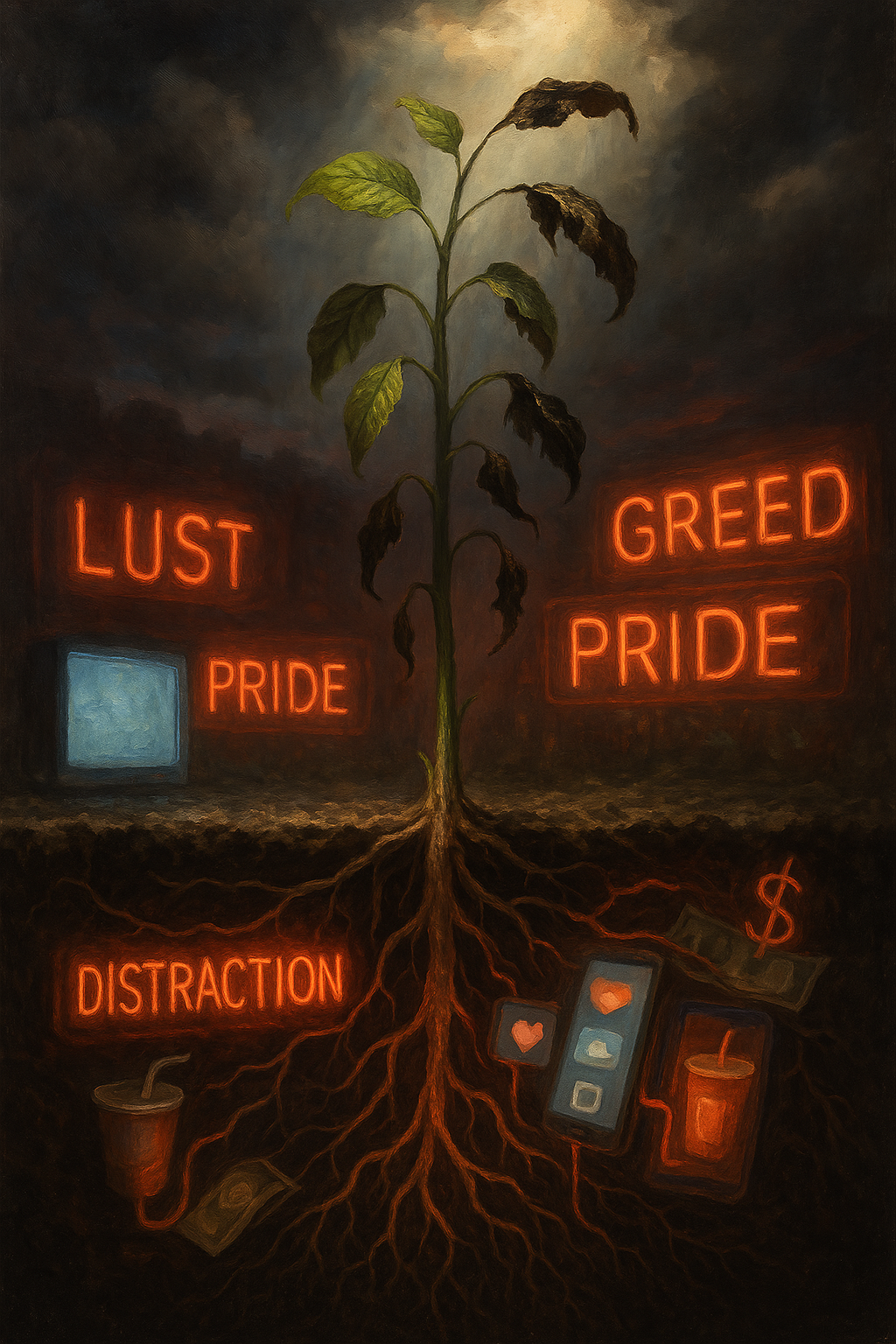
Lately, I’ve been sitting with an uncomfortable truth: the man I show to the world doesn’t always match the man I am when no one’s watching. In some intentional moments, I still choose distraction over devotion, comfort over courage, and myself over God.
I’ve been a believer long enough to know what I should do, but as I sat in church this past Sunday, Pastor John’s words cut through my excuses:
“It’s not what you do on stage, it’s the work put in off-stage.”
That’s when Proverbs 14 began to speak, pressing me to ask the question I can’t shake:
What am I truly cultivating in the unseen corners of my life?
Proverbs 14:1—“The wisest of women builds her house, but folly with her own hands tears it down.”
This verse opens the chapter like a quiet warning. It doesn’t describe a woman destroying her house out of malice—just folly.
For me, folly can be as simple as letting things slide—ignoring that tug in my spirit, choosing what’s easy, letting my appetites lead—the slow undoing of wisdom by things that feel small at the time.
I’ve offered much to God—my heart, beliefs, words—but I keep a few rooms locked. Not dramatic sins, but personal ones—habits I turn to when I’m tired, anxious, or just seeking comfort. These temporary escapes make long-term obedience harder, and the longer I hold onto them, the tougher surrender becomes.
Proverbs 14:14—“The backslider in heart will be filled with the fruit of his ways, and a good man will be filled with the fruit of his ways.”
It’s not about whether you’re having a bad week—it’s deeper. It’s about trajectory. What direction am I facing when no one’s watching? What habits have taken root? What fruit is quietly growing in the hidden soil of my private life?
Even as someone newer in faith, I’m already seeing how easy it is to slip into spiritual compromise—not a rejection of God, but a toleration of things I know He’s asking me to lay down.
Our daily rhythms expose more truth than our declarations. And some of my habits—especially when I’m alone—don’t reflect the man I want to become. I’ve noticed that when I’m overwhelmed, I tend to choose short-term relief over long-term wholeness.
I say I want to live like Christ. And I do. But then I look at my patterns and realize how often I’m living for myself. That contradiction is hard to face. Because I don’t want to fake this.
My kids are watching. My church family sees parts of me. But God sees everything—especially the parts I’ve tried to excuse. The small justifications. The indulgences I haven’t really tried to kill.
That’s what makes this feel urgent: I’m not just raising children—I’m forming people who are learning how to live, how to wrestle, how to grow. At my children’s school, where civic virtue is taught alongside rigorous academics, they are learning that actions build habits, and habits build character.
That isn’t just a motto—it’s a spiritual blueprint.
And, through my children, the question presses back on me: What kind of character am I modeling through my routines, even the ones I think no one sees?
And yet, I also hear the Spirit whisper: You’re not alone in this.
Paul knew this same tug-of-war:
Romans 7:19—“For I do not do the good I want, but the evil I do not want is what I keep on doing.”
I love God. I really do. I want to please Him. And yet, I keep returning to things I know I should lay down. That is evidence of how much I still need Him.
If roots nourish and routines shape, then reach is the fruit.
Proverbs 14:28—“In a multitude of people is the glory of a king, but without people a prince is ruined.”
This verse reminds me that none of this is private. My spiritual health, or lack of it, ripples into others’ lives—especially those closest to me. What I dread most is being a hypocritical Christian, living in a way that could negatively affect others and reinforce their misconceptions about Jesus’ followers, especially when I long to reflect His love authentically.
What kind of man am I becoming in the unseen places? What kind of father, husband, friend, or witness will grow out of that?
I can’t just aim to appear Christlike. I want the real thing. I want to be transformed, not merely convincing.
Final Thought:
We live in an age of curation—where we control what others see. It’s easy to build a version of ourselves that looks “wise” from the outside. But Proverbs 14 invites us into something deeper: not performative holiness, but inward reality.
Character that’s formed in the quiet.
The good news? This chapter doesn’t just confront—it invites. It calls me to examine the soil of my life—my roots, routines, and reach—not with shame, but with hope.
Maybe that’s what spiritual maturity begins with: not victory, but honesty. Not pretending to be whole, but letting Jesus into the parts of me that still resist healing.
I’m beginning to see conviction as mercy, letting discomfort draw me closer—a sign God is still speaking, still shaping, still refusing to let me settle.
When the Spirit stirs, even in the quiet places I’d rather ignore, it’s grace breaking in. A grace that isn’t content to leave me unchanged, but patiently and persistently draws me toward the likeness of Christ.


Let me know what you think.